

The Advisor Retirement Crisis: Why Your Firm’s Future Depends on Recruiting Young Talent
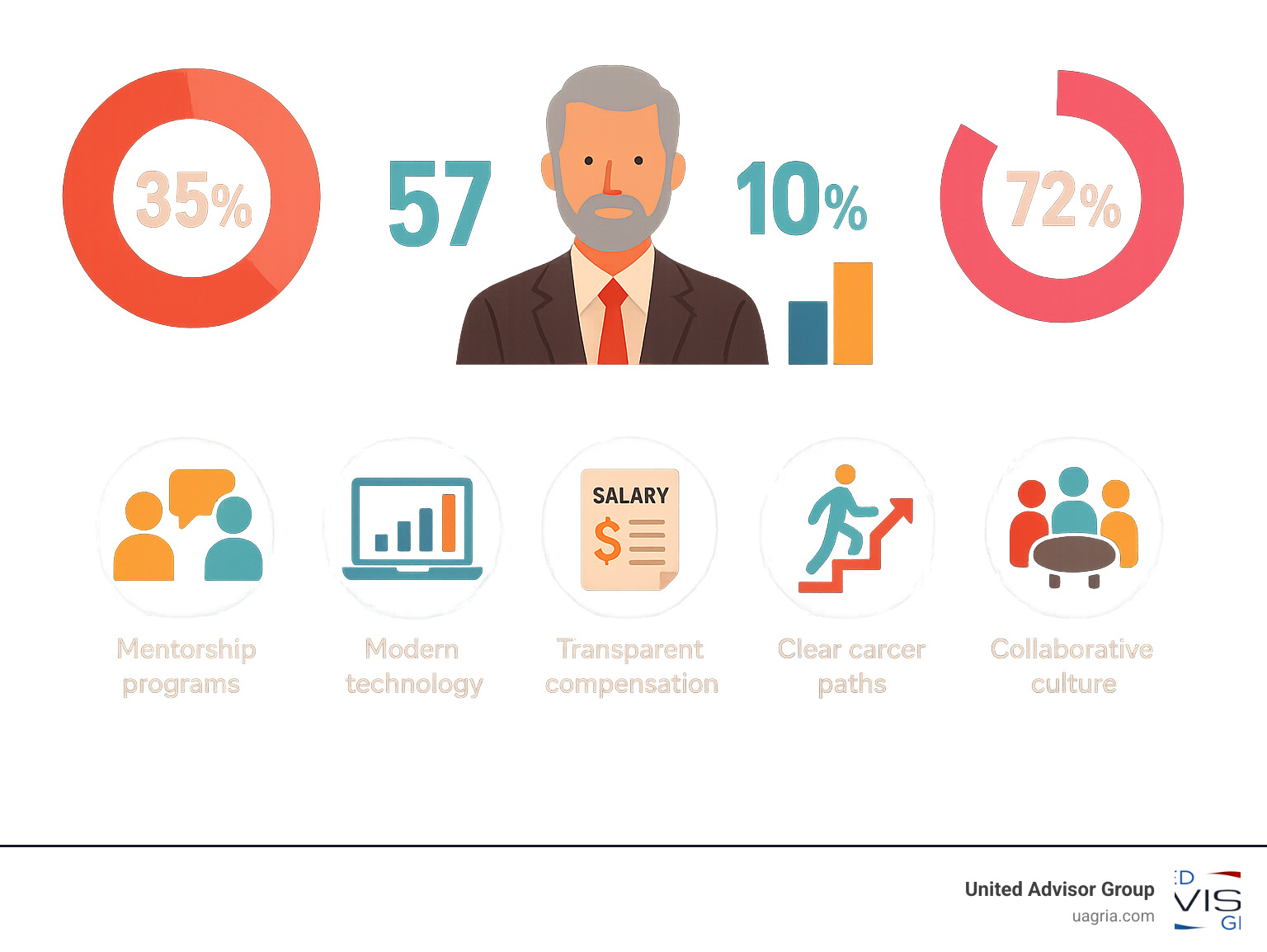
Recruiting the next generation of financial advisors is a survival strategy. The numbers are stark: more than one-third of financial advisors will retire in the next 10 years, while only 10% of today’s advisors are under 35. This demographic cliff threatens to leave $6 trillion in advisor-managed assets without proper succession planning.
Key challenges in recruiting next-generation advisors:
- Aging workforce – Average advisor age is 57, with more advisors over 70 than under 30
- Poor industry perception – The 2008 financial crisis damaged the profession’s reputation
- High attrition rates – 72% of new advisors leave before becoming fully licensed
- Outdated recruiting models – Traditional “cold calling” approaches don’t align with modern values
- Cultural misalignment – Young talent seeks purpose, collaboration, and work-life balance
What attracts millennial and Gen Z advisors:
- Transparent compensation with salary-based models
- Strong mentorship and structured training programs
- Modern technology and digital-first client experiences
- Clear career progression paths beyond pure sales metrics
- Firm cultures that prioritize collaboration over competition
The firms that crack this code won’t just survive the talent shortage—they’ll thrive by building diverse, tech-savvy teams to serve the next generation of clients.
As Ray Gettins, Director at United Advisor Group, I’ve seen how successful firms are evolving their approach to recruiting the next generation of financial advisors by offering the autonomy and collaborative environment top talent demands. United Advisor Group’s advisor-first structure provides the flexibility and support that helps exceptional advisors attract and develop the next wave of financial professionals.
Understanding the “Why”: The Looming Talent Shortage and the Next-Gen Mindset
The financial advisory industry is experiencing a demographic earthquake. The average age of financial advisors is 57, and over a third will retire in the next decade. Meanwhile, only 10% of today’s advisors are under 35. A slow-motion talent exodus is happening right now.
Why aren’t young professionals rushing into financial advice? The 2008 financial crisis left deep scars. Many millennials and Gen Z see financial services as a world of high-pressure sales and questionable ethics—not the career they’re dreaming about.
But the young professionals who are considering financial advice have different priorities. Recruiting the next generation of financial advisors means understanding what they want.
Millennials and Gen Z want purpose-driven work. They want to know they’re making a real difference in people’s lives, seeing themselves as financial coaches and life planners, not product pushers. The old “sell first, advise second” model is a hard pass for them.
Work-life balance is non-negotiable. They’ve seen older colleagues burn out and are determined not to follow that path, seeking flexibility, reasonable hours, and personal time.
These future advisors crave collaboration over competition. They want to work in teams, share ideas, and learn from mentors. The lone wolf advisor model feels outdated and isolating. They’re looking for environments where they can contribute meaningfully from day one, not spend years cold-calling from a cubicle.
This generation is tech-savvy by default—they expect modern tools, streamlined processes, and digital-first client experiences. Outdated software is a deal-breaker.
Here’s what’s exciting: younger, more diverse clients want an advisor to match. As the client base evolves, firms need advisors who can connect with these new demographics. It’s about shared values, communication styles, and life experiences.
The firms that “get it” are adapting. They’re focusing on enhancing client relationships through genuine connection, not just performance metrics. They’re creating cultures where young advisors can thrive as collaborative partners. The talent shortage isn’t just a numbers problem—it’s a mindset shift. Recruiting the next generation of financial advisors means embracing their values.
A Blueprint for Recruiting the Next Generation of Financial Advisors
The solution to the talent crisis requires a shift in recruiting the next generation of financial advisors. Instead of just posting a job, we must meet young professionals where they are and speak their language.
First, stop talking about “sales” and start talking about “impact.” Young professionals often associate “financial advisor” with pushy sales. Reframe the role as a financial coach or life planner—someone who guides families through major life decisions. That’s the story that resonates.

University partnerships are a secret weapon. Actively court graduates at career fairs with engaging branding that shows the human side of financial planning. Offer guest lectures in business classes to share real client success stories. Sponsor financial planning competitions that highlight the creative problem-solving side of our work.
Internship programs are key. They are extended auditions benefiting both sides. Students get real-world experience, and firms evaluate potential hires over months, not minutes. Many successful advisors started as interns.
Your professional network is also valuable. Networking through professional circles like CPAs and attorneys can uncover professionals ready for a career change. These warm introductions are more natural than cold outreach.
Your digital presence matters. Young professionals research companies on LinkedIn and social media before applying. Share thought leadership, showcase your team culture, and highlight employee success. When posting jobs, craft descriptions that tell a story and include salary ranges. Transparency signals that you respect their time.
How to Attract a Broader and More Diverse Talent Pool
Younger, more diverse clients want an advisor to match. If your team doesn’t reflect the communities you serve, you’re missing opportunities.
Building a diverse talent pipeline starts with intentional action. Use inclusive language in job posts. Showcase your diverse team members on your website so candidates can see themselves fitting in.
Build trust with underrepresented communities by partnering with multicultural organizations and attending their events. Establish relationships with Historically Black Colleges and Universities (HBCUs) and Hispanic Serving Institutions (HSIs). These partnerships take time but create authentic connections and lead to quality hires.
Most importantly, create a culture of belonging where everyone feels valued. Diverse hiring only works if people want to stay. Enhancing client relationships becomes easier when your team brings different perspectives to the table.
Crafting a Compelling Offer for recruiting the next generation of financial advisors
Your offer needs to seal the deal. Compensation transparency is expected. Young advisors often prefer salary-based models over commission, especially early in their careers. They want stability, not the pressure of an “eat-what-you-kill” environment that 28% of firms cite as contributing to high turnover.
Money is just the start. Comprehensive benefits show you’re invested in their whole life. This includes robust health insurance, paid parental leave (offered by only 40% of employers), and solid retirement plans. These benefits signal you want them for the long haul.
The most forward-thinking firms also offer true autonomy. At United Advisor Group, we’ve seen how powerful it is when advisors are free from proprietary product pressures and broker/dealer compliance burdens. When advisors can focus on what’s best for their clients, they attract like-minded professionals. The benefits of advisor autonomy create the kind of culture top talent seeks.
For advisors wondering what this independence could mean financially, our calculator shows how much more you could earn in a truly autonomous environment.
Beyond the Offer Letter: Building a Culture That Retains Young Talent
Attracting new talent is just the beginning. The key to keeping them lies deep within your firm’s culture. Culture is the invisible heartbeat that makes people want to stay, thrive, and tell their friends to join. In fact, a whopping 90% of advisors say that firm culture is important to them, and more than half recruit other advisors to their firm because of it. It’s the glue that holds a team together.

At the heart of a thriving culture are robust mentorship programs. New advisors crave guidance. A significant 71% desire mentorship and training in financial planning, and another 71% seek support in investment analysis and licensing. A well-structured mentorship program, where seasoned advisors actively guide and teach, can make all the difference. This “teaching hospital” model allows new talent to gain immersive, practical experience. This support is crucial for addressing the high attrition rate among new advisors, which stands at a disheartening 72%.
Beyond mentorship, professional development opportunities are non-negotiable. Providing access to certifications, continued education, and skill-building workshops shows you’re invested in their long-term success. This commitment helps combat stagnation that can push good people to look elsewhere.
Perhaps one of the most impactful aspects of retention is simply listening to employees. An alarming 86% of workers don’t feel heard in their workplace. Yet, when employees do feel heard, a significant 74% report they are more effective at their job. Creating a culture where feedback is genuinely valued and acted upon builds immense trust. This means regular check-ins, open-door policies, and a real interest in their perspectives.
By fostering a supportive and collaborative environment, firms can transform a high-pressure industry into a nurturing ecosystem. This shift from an “eat-what-you-kill” mentality to one where success is shared is incredibly appealing to a generation that values teamwork. It’s about building a place where young advisors feel safe to learn, grow, and become long-term members of your team. This focus on culture is key when recruiting the next generation of financial advisors and ensuring they stay.
Modernizing Your Practice: Technology, Career Paths, and Advisor Autonomy
If your firm runs on outdated technology and unclear career paths, you’re actively pushing young talent away. Recruiting the next generation of financial advisors requires a complete modernization of how you operate.
Let’s start with technology. Young advisors don’t just prefer modern tech—they expect it. Asking them to work with clunky, outdated software is like asking a race car driver to compete on a bicycle.
The numbers tell the story: a shocking 65% of firms admit their outdated software has lost them business. Worse, many firms mistakenly believe their tech is “modern.” This disconnect is costing firms both clients and talent.
What does a modern tech stack look like? It includes intuitive CRM systems, financial planning software that clients can understand, and digital platforms for a smooth client experience. When you give young advisors these tools, they bring fresh efficiency and innovative approaches to client service.
But technology alone won’t keep young talent. They need to see a future at your firm—a clear career path that doesn’t leave them guessing. This means creating structured progression from paraplanner to associate advisor to lead advisor, with each step clearly defined.
Equity opportunities and partnership tracks are game-changers for retention. When young advisors see they can own a piece of what they’re building, their mindset shifts from “job” to “career.” They start thinking like owners. This aligns with what growth-minded investment advisors aim to achieve—building something lasting.
Perhaps most importantly, young advisors crave advisor autonomy. They want mentorship, not micromanagement. They want to be trusted with client relationships and empowered to develop their own approaches. This balance between support and independence attracts top talent.
At United Advisor Group, we’ve built our model around this principle. We believe that when advisors have the freedom to serve clients without proprietary product pressures, everyone wins—the advisor, the client, and the firm.
Structuring Compensation and Career Paths for recruiting the next generation of financial advisors
Getting compensation right is crucial. The old commission-only, “eat-what-you-kill” model is scaring young talent away. Instead, base salary plus bonus structures provide the security young advisors need while still rewarding performance.
Fee-based models are attractive because they align with how young advisors want to work—transparently and in their clients’ best interests. This eliminates the pressure to push products and allows them to focus on providing genuine financial guidance.
Long-term incentives like profit-sharing or equity stakes create real commitment. When young advisors see they can build wealth alongside the firm’s growth, they’re more likely to stick around.
The key is tying advancement to skill development milestones, not just sales targets. This shows you value their professional growth, not just their revenue generation. It’s about building careers, not filling quotas.
For firms considering this evolution, understanding the insights on the costs of becoming an RIA can help structure sustainable and attractive compensation models. The investment in modernizing your approach to talent will pay dividends for decades.
Integrating for Success: Onboarding New Advisors and Future-Proofing Your Firm
The final piece of recruiting the next generation of financial advisors is keeping them and helping them thrive. The statistics are sobering: over 70% of new advisors leave before becoming fully licensed, and the overall failure rate is 72%. This is often the result of throwing new talent into the deep end without support.
A structured onboarding process should be a guided journey, not a sink-or-swim experience. Successful firms treat the first few months as an apprenticeship, giving new advisors time to absorb the firm’s culture, understand service standards, and build confidence.

Team-based integration is where the magic happens. Embed new hires within collaborative teams from day one. This creates natural mentorship opportunities and provides immediate peer support. When someone has questions, there’s always someone nearby to help.
Shadowing senior advisors gives new talent a front-row seat to see how successful client relationships work. They observe how experienced advisors handle difficult conversations, present complex financial concepts, and build trust. It’s a master class in real-world financial planning.
Client integration strategies require finesse. The old model of expecting new advisors to immediately build their own book of business is unrealistic. Instead, introduce them gradually to existing client relationships. They might start as a support advisor, then present alongside senior advisors before taking on their own client responsibilities.
This approach serves a dual purpose. Building a robust succession plan isn’t just about preparing for retirements; it’s about creating seamless continuity for clients while providing growth opportunities for emerging talent. When senior advisors eventually step back, clients already know and trust the next generation.
Transferring client relationships smoothly becomes natural when it’s been happening gradually. Clients see the new advisor as part of their trusted team, not a stranger. This creates value for everyone—clients maintain their relationships, senior advisors transition with confidence, and young advisors inherit established trust.
At United Advisor Group, we’ve seen how this thoughtful integration process transforms careers and firms. Our RIA Transition Success Stories showcase how smooth transitions benefit everyone, creating lasting change.
Building a firm legacy means thinking beyond today’s challenges. When you invest in onboarding and integration, you’re not just hiring employees—you’re cultivating future leaders.
Frequently Asked Questions about Recruiting Young Advisors
What is the biggest mistake firms make when trying to recruit young advisors?
The biggest mistake firms make when recruiting the next generation of financial advisors is focusing only on the paycheck. Young talent craves a strong firm culture, robust mentorship, and a clear career path. They’re seeking purpose and a place that invests in their professional development. The industry’s high attrition rate, where 72% of new advisors don’t make it, often stems from this disconnect. Many firms still rely on outdated, sales-heavy models that don’t align with what today’s talent is searching for.
How long should a training program for a new advisor last?
There’s no one-size-fits-all answer, but successful training programs are rarely short. A minimum of nine to twelve months is often ideal. This allows for true integration into the firm’s culture and processes. During this time, new advisors typically receive a salary, offering stability. They learn administrative tasks, shadow senior advisors, and develop financial planning skills. 71% of new advisors are eager for this guidance! This structured, team-based approach allows them to gradually take on client-facing responsibilities in a supportive environment, preventing burnout and setting them up for long-term success.
Are young advisors more likely to want to work remotely?
Surprisingly, the answer isn’t a simple “yes.” While remote work is popular, the advisory industry shows a nuanced preference for in-office or hybrid collaboration. A J.D. Power study revealed that 62% of financial advisors prefer to be in the office most or all of the time. This preference often comes down to the value they place on face-to-face mentorship. Being in the office allows for organic team dynamics and spontaneous learning that’s harder to replicate virtually. While flexibility is a big plus, a completely remote setup might not be the primary draw for every aspiring advisor in this relationship-driven profession.
Conclusion
The challenge of recruiting the next generation of financial advisors is one of the biggest opportunities our industry has seen in decades. It’s a chance to rebuild how we attract, develop, and retain talent from the ground up.
The secret isn’t complicated. It’s about understanding what drives Millennial and Gen Z professionals. They want their work to matter. They crave mentorship and collaboration over cutthroat competition. They expect modern technology and value work-life balance as much as career advancement.
The firms that will thrive are those embracing these changes. This means investing in cutting-edge technology, building mentorship programs where senior advisors teach and junior advisors feel supported, and creating clear career paths that show young talent how they can grow.
What truly matters is building a culture where people feel heard, valued, and empowered. Since 86% of workers don’t feel heard at their jobs, firms that master this gain a massive competitive advantage.
If you’re a growth-minded advisor tired of the old way of doing things, you’re not alone. United Advisor Group was built for advisors who want to serve clients without proprietary product pressures or broker/dealer compliance headaches. We believe that with true autonomy, advisors naturally attract like-minded talent.
Our platform gives you the freedom to build a practice that appeals to next-generation advisors—one focused on genuine client service, not sales quotas. When you’re part of a firm that champions advisor independence, recruiting the next generation of financial advisors becomes infinitely easier.
Ready to see what true independence could mean for your practice? Access the UAG calculator to see how much more you can earn. And if you’re curious about making the transition, explore the key problems when transitioning to an RIA from a broker-dealer to see how the right partner makes all the difference.
The future of wealth management is bright. Let’s build it together.

