

The Foundation of a Thriving Financial Practice: Client Retention
Client retention strategies are the plans and actions businesses take to keep their existing clients happy and engaged over time. They aim to reduce client churn and build lasting relationships. For financial advisors, this means ensuring clients stay with you, continue to grow their assets, and refer others.
Here’s why client retention matters for your financial advisory business:
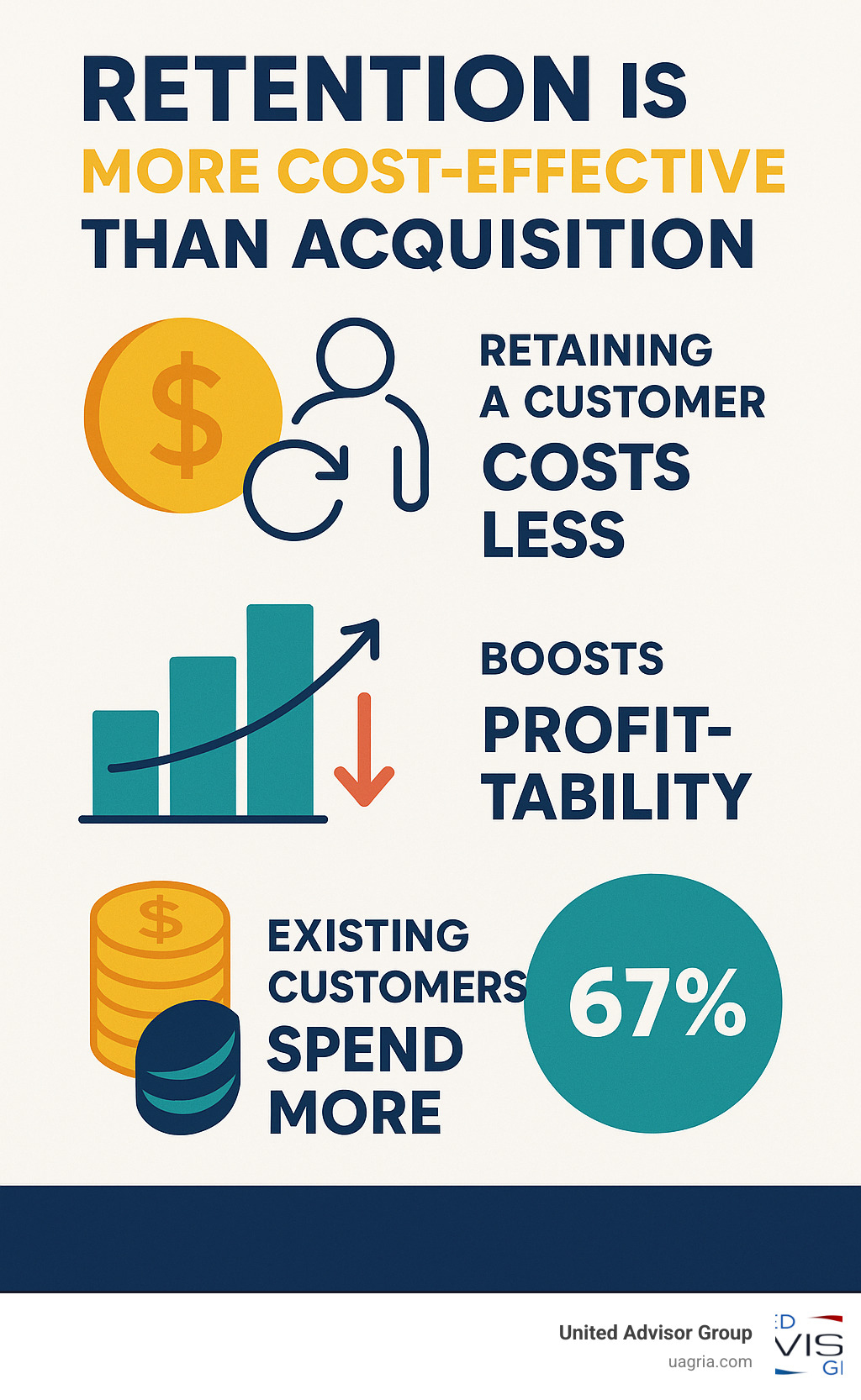
- Cost-effectiveness: It’s much cheaper to keep a client than to find a new one. Acquiring new customers costs far more.
- Increased Profitability: Even a small increase in retention can greatly boost your profits. A five percent increase in client retention can boost profitability by 75 percent.
- Higher Lifetime Value: Loyal clients tend to spend more over time. Repeat customers spend 67% more on a business they love.
- Predictable Revenue: A stable client base means more consistent income.
- Referrals: Happy clients become your best advocates, bringing in new, pre-qualified leads.
As Director at United Advisor Group, I’ve seen how crucial strong client retention strategies are for building a sustainable practice. My experience shows that supporting advisors with flexibility and collaboration empowers them to better serve clients, leading to long-term success.
Why Client Retention is the Cornerstone of a Thriving Advisory Practice
As a financial advisor, you know that keeping an existing client is far cheaper than finding a new one. This wisdom is the bedrock of a thriving practice. Focusing on robust client retention strategies isn’t just about saving money; it’s about building a strong, profitable, and sustainable future.
The cost of acquiring new clients—from marketing to onboarding—is immense. Research shows it can cost 5 to 25 times more than retention. By focusing on keeping the clients you have, you reduce these acquisition costs, freeing up resources to improve your services or improve your bottom line.
A high retention rate directly boosts profitability. A mere five percent increase in client retention can increase profits by an incredible 75 percent! This is the power of Customer Lifetime Value (CLV). Loyal clients invest more over time, creating a stable revenue stream that supports long-term organic business growth.
Beyond financials, strong retention fuels your best marketing engine: word-of-mouth referrals. Satisfied clients become advocates, bringing you pre-qualified leads. This helps you build a sustainable practice based on genuine relationships, not a constant chase for new business.
The Advisor’s Toolkit: 7 Powerful Client Retention Strategies
Building a thriving financial advisory practice isn’t just about attracting new clients; it’s about nurturing those relationships so they stay with us for the long haul. We’ve found that the most successful advisors are those who skillfully implement robust client retention strategies. These aren’t just about keeping clients from leaving; they’re about changing them into loyal advocates who champion our services.
Here, we present seven powerful strategies that, when integrated into our practice, can significantly improve client loyalty and ensure a flourishing future. These strategies focus on proactive communication, deep personalization, and consistently delivering value beyond expectations.

1. Build Unbreakable Trust Through Transparency and Autonomy
Trust is earned through every interaction. For financial advisors, effective client retention strategies begin with building this trust through complete transparency and respecting client autonomy.
This starts with your fiduciary responsibility—your promise to always put clients’ interests first. This commitment is the foundation of trust. Transparency comes to life through open communication about fees, processes, risks, and realistic expectations. When clients understand what they’re paying for and why, they feel respected. Setting clear expectations from day one creates a partnership built on mutual understanding.
Advisor autonomy is a game-changer for trust. When you have the freedom to choose from any solution in the marketplace—without being pushed toward proprietary products or sales quotas—your advice is genuinely unbiased. Clients can sense when a recommendation is truly for them versus a corporate mandate.
This independence allows you to align completely with your clients’ interests, selecting the best-fit solutions from anywhere. When clients see your loyalty is to them, not a product lineup, their trust deepens into the kind of loyalty that lasts for decades.
2. Deliver Hyper-Personalized and Collaborative Financial Planning
Hyper-personalized financial planning is essential in today’s advisory landscape. Research shows that personalization drives a 10% to 15% revenue increase and transforms the client relationship.
Clients want an advisor who understands their unique dreams, fears, and circumstances. Understanding client goals on a deep level allows you to craft recommendations that resonate personally. A robust CRM is invaluable for tracking personal milestones and evolving priorities, helping you tailor recommendations that feel genuinely relevant.
Collaborative planning turns the dynamic into a partnership. Involve clients in the creation process by asking for input and explaining your reasoning. This ensures they feel invested in their financial strategy. Regular reviews are also key opportunities to strengthen relationships and demonstrate your ongoing commitment as their life and goals evolve.
An independent model like ours at United Advisor Group provides the freedom to personalize without constraints. This autonomy allows for genuine milestone planning that adapts to each client’s journey, creating the kind of experience that builds lifelong loyalty.
3. Master Proactive Communication and Client Education
In financial planning, silence is rarely golden. Proactive communication and continuous client education are vital client retention strategies. We believe that by keeping our clients informed and empowered, we build confidence and significantly reduce anxiety, especially during uncertain times.
Our communication strategy involves more than just responding to inquiries. We implement scheduled check-ins, ensuring regular touchpoints that go beyond formal reviews. This could be a quick call to share a relevant article, a personalized email acknowledging a life event, or a brief update on market trends that might impact their portfolio.

Client education is another cornerstone of our approach. We translate complex financial topics into simple, digestible information through various channels. Our educational newsletters provide timely insights, and our market commentary helps clients understand the broader economic landscape without getting lost in jargon. We also host client education programs, often in the form of webinars or workshops, where we dig into topics like tax planning, estate planning basics, or investment strategies. Customer education is crucial for clients to maximize value and understand product potential. By offering valuable educational resources, we not only empower our clients to make more informed decisions but also position ourselves as trusted advisors, always looking out for their best interests.
4. Create a Flawless Client Service and Onboarding Experience
First impressions are lasting. A flawless client service and onboarding experience is a critical component of your client retention strategies. Every interaction, from the first call to the first few months, should feel seamless, professional, and reassuring.
Moving to a new advisor can be daunting. Your goal is to make the transition smooth and efficient. Using seamless technology and streamlined workflows simplifies data collection and paperwork, reducing hassle for clients and freeing up your time. A confident and comfortable start sets the stage for a long, trusting relationship.
Beyond onboarding, responsive support is paramount. Promptly and effectively addressing questions makes clients feel heard and supported. With 73 percent of business leaders agreeing on the link between customer service and business performance, excellent service is a must-have.
When challenges arise, handle complaints effectively and with integrity. This means taking ownership of mistakes, apologizing sincerely, and working swiftly toward a resolution. A well-handled complaint can turn an unhappy client into a loyal advocate by showing you stand by them even when things get bumpy.
5. Implement a System for Gathering and Acting on Feedback
We believe that the most valuable insights often come directly from our clients. That’s why implementing a robust system for gathering and acting on feedback is a non-negotiable aspect of our client retention strategies. It’s not enough to simply ask for feedback; we must demonstrate that we genuinely listen and are committed to continuous improvement.
We use various methods to collect client feedback, including thoughtful client satisfaction surveys and good old one-on-one conversations during reviews. We also use powerful tools like the Net Promoter Score® (NPS) to really understand client loyalty and how likely they are to recommend your services to others. It’s a fantastic way to get a quick pulse check on your client relationships. Want to dive deeper into how NPS works and its benefits? You can learn more about NPS right here.
But here’s where the real magic happens: acting on that feedback. Engaged clients aren’t just giving you information; they’re giving you a roadmap for improvement. When you take their suggestions to heart, you’re not just refining your service; you’re building an even deeper bond of trust.
For example, if a client mentions they’d love clearer reporting, you explore how to make that happen. If they wish for more educational content on a particular topic, you make it a priority. By showing your clients that you don’t just hear them, but that you act on their input, you reinforce their value to your practice. This continuous loop of listening, learning, and improving ensures your services remain perfectly tuned to their needs, making them feel truly seen and valued.
6. Offer Value-Added Services Beyond Portfolio Management
Are you managing portfolios or managing your clients’ entire financial lives? The difference can make or break your client retention strategies. Clients today expect more than investment management; they want a comprehensive wealth manager who can guide them through life’s complexities.
Working independently gives you the freedom to act as your clients’ financial quarterback. Unconstrained by proprietary products, you can coordinate all aspects of their financial well-being. This includes:
- Coordinating with tax professionals to align investment and tax strategies.
- Providing estate planning guidance and connecting clients with attorneys.
- Conducting risk management and insurance reviews.
- Assisting with philanthropic planning and succession planning for business owners.
Beyond these services, building a client community through exclusive events and offering financial education for families fosters loyalty that transcends market performance and can span generations.
This holistic approach transforms you into a trusted life partner. The independent model at United Advisor Group makes this comprehensive service possible and profitable. When clients see you as essential to their financial well-being, retention becomes natural.
7. Develop a Strategic Client Appreciation and Referral Program
Making clients feel valued transforms a business relationship into something deeper. A strategic client appreciation and referral program is key to creating these special moments.
Recognizing client loyalty doesn’t require grand gestures. Small touches like a handwritten note, a thoughtful gift, or a simple check-in call can create a big impact and lasting memories.

Rewarding referrals acknowledges the immense trust a client places in you. Since 65% of new business comes from referrals, a formal system that acknowledges both the referrer and the new client is crucial.
Celebrating client milestones—like retirement or funding a child’s education—reinforces your partnership in their life victories. The independence at United Advisor Group allows for flexible and unexpected gestures, like a celebratory gift or a client dinner, without corporate restrictions.
When you consistently show appreciation, you build advocacy. Clients don’t just stay; they become enthusiastic champions, referring friends and family because they want to share the value you provide.
Measuring What Matters: How to Track Your Retention Success
What gets measured gets managed. To ensure your client retention strategies are effective, you must track their success with real data. These metrics are your practice’s vital signs, removing guesswork and helping you identify trends before they become problems.
Here are the essential metrics every advisor should track:
| Metric | Formula | What it Tells Us | Typical Benchmark (Professional Services) |
|---|---|---|---|
| Client Retention Rate (CRR) | ((Number of clients at end of period - Number of new clients acquired during period) / Number of clients at start of period) x 100 |
The percentage of clients we’ve retained over a specific period. A higher number indicates success. | 84% |
| Client Churn Rate | (Number of lost clients during period / Number of clients at start of period) x 100 |
The percentage of clients lost over a specific period. This is the inverse of retention; we aim for a lower number. | Varies, but lower is better |
| Customer Lifetime Value (CLV) | (Average Purchase Value x Purchase Frequency x Customer Lifespan) or (Average Revenue Per User x Average Customer Lifespan) |
The total revenue we expect from a client over their entire relationship with us. A higher CLV indicates more valuable, long-term relationships. | Varies widely |
Client Retention Rate (CRR) is your north star. A rate above the 84% industry benchmark is excellent.
Client Churn Rate shows where you’re losing clients. Small improvements here have a massive impact.
Customer Lifetime Value (CLV) measures relationship depth. A growing CLV means clients are expanding their relationship with you.
Use these insights to make proactive adjustments, such as increasing communication during market volatility if your CRR dips. At United Advisor Group, we see how advisor independence directly improves these metrics. When advisors can truly put clients first, retention rates soar and relationships deepen.
Frequently Asked Questions about Advisor Client Retention
What is a good client retention rate for a financial advisor?
While the professional services industry average is around 84%, top advisors should aim higher. At United Advisor Group, we help advisors target 95% or more. A top-tier retention rate signifies a deeply satisfied client base, which directly boosts your practice’s valuation and ensures long-term sustainability.
How does advisor autonomy and independence affect client retention strategies?
Advisor autonomy is a powerful booster for your client retention strategies. When you are free from proprietary product pressures and sales quotas, you can act as a true fiduciary. This independence allows you to select the absolute best solutions for your clients, building immense trust.
Clients sense when advice is genuinely unbiased and custom to them, not a corporate agenda. This fosters deeper, more authentic relationships and, in turn, powerful, long-term loyalty.
How can I effectively handle a client complaint to foster loyalty?
A client complaint is an opportunity to strengthen your client retention strategies. A well-handled issue can turn a negative experience into a moment of profound loyalty. 96% of people would continue buying from a company if they apologized and rectified a bad situation.
Follow this empathetic strategy:
- Listen Actively: Give your full, uninterrupted attention to understand their concern.
- Empathize: Acknowledge their feelings and validate their experience.
- Take Ownership: Take responsibility for finding a solution and offer a sincere apology.
- Resolve Promptly: Act quickly to fix the issue.
- Follow Up: Check in after the resolution to ensure they are satisfied.
This process demonstrates integrity and can turn an unhappy client into a loyal advocate.
Conclusion: Build a Legacy Practice, Not Just a Book of Business
Strong client retention strategies are about more than just keeping clients; they’re about building a legacy practice that stands the test of time. Nurturing long-term loyalty over constantly chasing new business leads to sustainable growth and a practice built on unbreakable trust.
At United Advisor Group, we know this success starts with advisor empowerment. There is a direct link between your autonomy and your clients’ loyalty. When you are free to choose the best solutions, operate transparently, and prioritize client needs, the result is unparalleled trust and lasting relationships.
Our model frees you from the burdens of proprietary products and broker/dealer compliance, so you can focus your energy on serving clients with excellence. This independence allows you to deliver comprehensive, unbiased, and hyper-personalized service, building a thriving practice on mutual respect.
We help advisors build a future of deep pride, financial stability, and enduring client relationships. It’s time to build the legacy practice you’ve always dreamed of.
Ready to see how true independence can impact your bottom line and client relationships? Use our calculator to find the financial benefits of moving your practice to United Advisor Group.