
Why Recruiting Independent Advisors is More Critical Than Ever
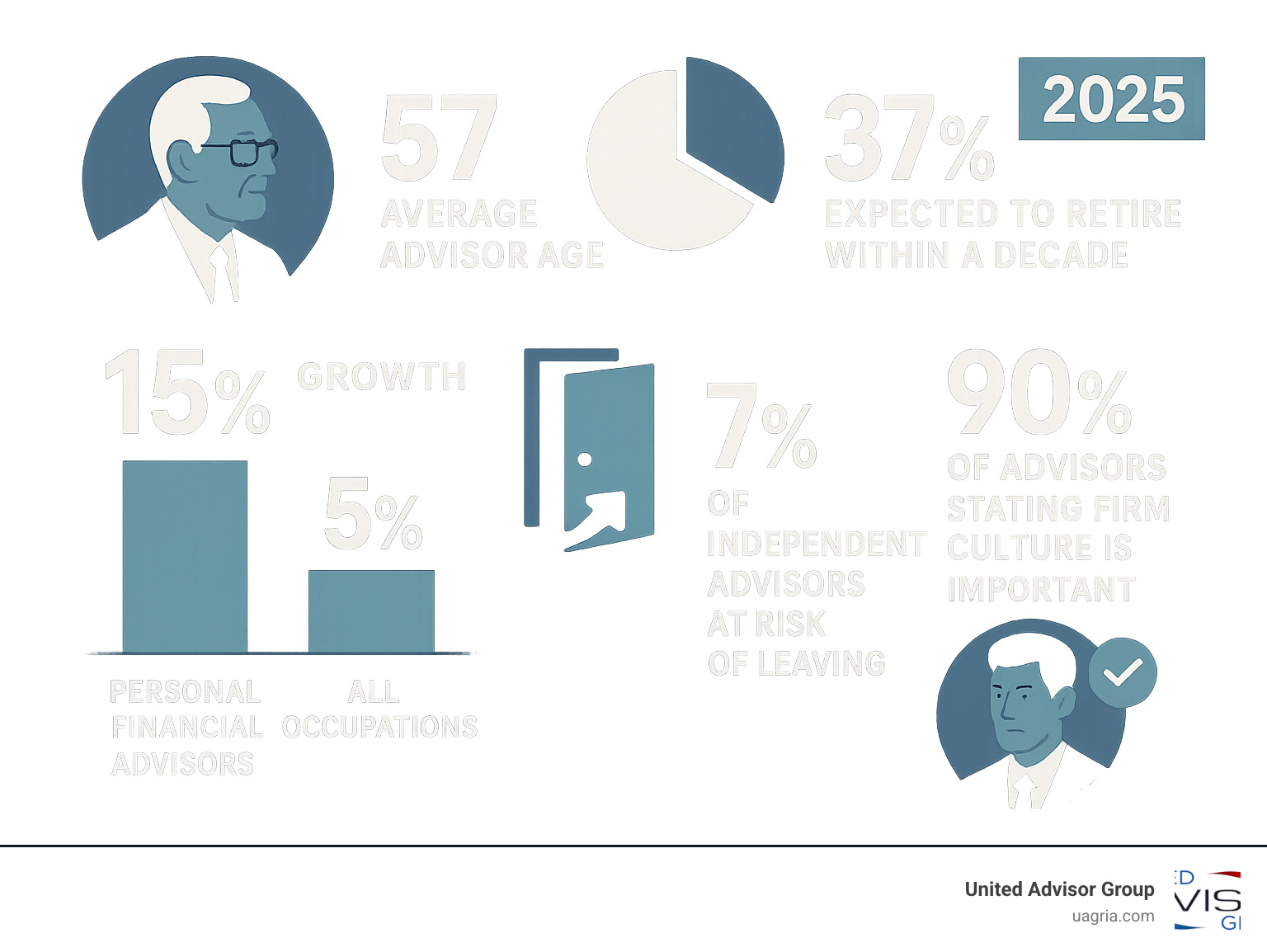
To recruit independent advisors effectively is to solve one of the most pressing challenges in financial services. The industry faces a perfect storm: 37% of financial advisors are expected to retire within the next decade, while demand for their services is exploding. Personal financial advisor jobs are growing at 15%, nearly three times the average for all occupations.
Key Strategies to Recruit Independent Advisors:
- Build a compelling value proposition focused on advisor autonomy and client-first service.
- Offer modern technology and infrastructure without proprietary product pressures.
- Create a collaborative culture that values advisor independence.
- Provide competitive compensation with clear career advancement paths.
- Leverage professional networks and employee referrals for talent pipeline development.
For firms that can successfully recruit independent advisors, this represents an enormous opportunity. But recruiting them is different. Independent advisors value autonomy above almost everything else. They seek freedom from restrictive compliance and pressure to sell proprietary products, wanting to truly serve their clients’ best interests.
A recent survey found that 7% of independent advisors are “at risk” of leaving their current jobs due to outdated technology, limited growth, and misaligned cultures. While 90% of advisors say that their firm’s culture is “important to me,” a staggering 86% of workers don’t feel heard in their workplace. This guide shows how to position your firm as the solution.
I’m Ray Gettins, Director at United Advisor Group. We’ve built our structure around helping exceptional advisors better serve their clients. Our collaborative approach has taught me what it takes to recruit independent advisors who value true independence and client-focused service.
The Modern Independent Advisor’s Mindset: Why They Move and What They Seek

Understanding what drives advisors to seek change is the first step to successfully recruit independent advisors. They are accomplished professionals who have reached a breaking point, often after realizing they spend more time navigating internal politics than serving clients.
Primary Motivations for Seeking Change
The biggest frustration is a lack of true independence. Many advisors find themselves in environments where proprietary products take priority over client needs, forcing them to recommend products that may not be the best fit.
Technology limitations are another major pain point. A recent study revealed that while 58% of advisors thought their technology was “modern,” 65% admitted their outdated software had lost them business. This disconnect shows how many firms are falling behind.
Finally, compliance burdens that add paperwork without adding value are a common complaint. Advisors want to focus on building meaningful client relationships, not drowning in red tape. These issues contribute to the 7% of independent advisors actively “at risk” of leaving their current positions. These are often the most successful advisors who have outgrown their constraints.
Exploring Different Affiliation Models
When advisors decide to move, they face several paths, each with different levels of freedom and support.
Independent Broker-Dealers offer a middle ground with better economics than wirehouses but may still have limitations on product selection and platforms.
Supported Independence platforms are popular because they offer the best of both worlds. Advisors run their own independent practice while the platform handles compliance, technology, and back-office operations. This model lets advisors focus on serving clients and growing their business.
Launching a fully independent RIA provides maximum autonomy but requires significant operational expertise and resources to handle compliance and support.
The choice depends on an advisor’s entrepreneurial appetite, but the key insight for firms is that these professionals seek fulfillment, not just a job change.
| Model | Pros | Cons |
|---|---|---|
| Supported Independence | Maximum autonomy with operational support; client-first focus; modern technology; comprehensive back-office services | Requires due diligence on platform quality; may have higher minimums for top-tier services |
| Hybrid Models | Some independence with institutional backing; familiar compliance structure; gradual transition possible | Limited product flexibility; potential conflicts of interest; restricted technology choices |
| Fully Independent RIA | Complete control over all decisions; unlimited product access; custom technology stack | High operational burden; requires significant scale; complex compliance responsibilities |
The key insight for firms looking to recruit independent advisors is understanding that these professionals aren’t just seeking a job change – they’re seeking professional fulfillment. They want to wake up excited about serving their clients without worrying about internal conflicts or outdated systems holding them back.
How to Recruit Independent Advisors by Building an Attractive Firm

To recruit independent advisors, you must offer more than a job; you must offer a partnership. Top advisors seek a firm that understands what growth-minded investment advisors aim to achieve and provides the foundation to get there.
Crafting a Compelling Value Proposition
Your Employee Value Proposition (EVP) is your firm’s promise to advisors. The most compelling EVPs start with advisor autonomy—the freedom to make recommendations based solely on what’s best for each client. When an advisor can offer truly independent financial advice without proprietary product quotas, their recommendations build deeper trust and stronger client relationships.
A strong value proposition also includes robust back-office support to handle compliance and administrative tasks, freeing advisors to focus on clients. Furthermore, providing marketing assistance and sharing the secrets to achieving organic business growth effectively gives advisors the tools to expand their practice.
The Critical Role of Technology and Infrastructure
Outdated technology costs advisors money and clients. To successfully recruit independent advisors, your technology stack must be a competitive advantage. This includes:
- Modern CRM systems that are intuitive and help provide personalized service.
- Powerful financial planning software that can handle complex scenarios and produce client-friendly reports.
- Secure client portals that offer 24/7 access and serve as a hub for the client relationship.
- Top-tier cybersecurity to protect sensitive client information.
- Flexible communication tools that support virtual consultations and meet clients where they are.
Fostering a Culture That Resonates with Independent Advisors
Culture is a deal-breaker for top talent, as 90% of advisors say that firm culture matters to them. An authentic culture is built on several pillars:
- Transparency: Honest communication from leadership about opportunities, challenges, and the firm’s direction.
- Collaboration: An environment where collaborative financial planning is a strength, allowing advisors to tap into collective wisdom.
- Mentorship: Pairing experienced advisors with those looking to grow, creating a culture of continuous learning.
- Work-life balance: Offering flexible options that allow advisors to do their best work without burning out.
- Feeling Heard: With 86% of workers feeling unheard, creating a space where advisor input matters is a massive opportunity for engagement and effectiveness.
Building an attractive firm means creating an environment where independent advisors can thrive. Get this right, and you’ll attract the kind of advisors who build lasting, successful practices.
The Strategic Playbook for Recruiting and Retaining Talent

Attracting and retaining top independent advisors requires a thoughtful strategy from sourcing to long-term success. At United Advisor Group, we provide comprehensive services that support advisors at every step.
Best Practices to Recruit Independent Advisors
To recruit independent advisors effectively, a multi-faceted approach is key.
- Networking: Actively engage at industry events and with professional associations.
- Employee Referrals: Leverage your current team, as their positive experiences are powerful endorsements.
- Social Media: Use platforms to share insights and highlight your firm’s culture.
- Niche Targeting: Tailor outreach to an advisor’s specific practice and client base.
- Proactive Relationship Building: Get to know promising advisors before a role opens to be ready when they are.
Interviewing and Assessing for the Perfect Fit
Our interview process looks beyond technical skills to find a “culture contribution”—someone whose unique perspective will enrich our team. We use behavioral questions (“Tell us about a time…”) and case studies to see practical skills and values in action.
A client-first mentality is non-negotiable. We also look for red flags like a lack of transparency or unwillingness to collaborate. To ensure a well-rounded assessment, we involve the team in the hiring process, which helps us confirm a great fit from every angle.
Onboarding for Long-Term Success and Retention
Our comprehensive onboarding process ensures a smooth integration and sets advisors up for success. This approach is inspired by best practices from various professional fields, as detailed in resources like this one on borrowing tactics from other professional fields.
Key elements include:
- Structured Onboarding: A multi-week program covering firm policies, technology, and client philosophy.
- Mentorship Programs: Pairing new advisors with experienced mentors for guidance and support.
- Tech Training: Ensuring proficiency with all systems to serve clients efficiently.
- Clear Expectations: Defining roles, responsibilities, and career paths, including equity options.
- Regular Check-ins: Creating opportunities for feedback to ensure advisors feel supported and heard.
Navigating the Legal and Financial Landscape of Advisor Transitions

The legal and financial aspects of changing firms can feel overwhelming, but we guide advisors through every step of a successful transition.
Key Legal and Compliance Considerations
The legal side of changing firms requires careful navigation. We start by reviewing any non-solicitation agreements to ensure a smooth transition. If your current firm is part of the Protocol for Advisor Transitions, it’s easier to bring client contact information, but we have strategies for non-protocol moves as well.
Our secure, compliant client data transfer processes protect you and your clients. We also conduct a mutual due diligence process, ensuring complete transparency about our operations and your practice. As a Registered Investment Advisor, we are well-versed in SEC and state regulations and will ensure you are fully compliant.
How to Structure Compensation to Recruit Independent Advisors
Since 28% of firms cite lower compensation as a top reason for advisor turnover, getting this right is essential. We believe in salary transparency, as 70% of advisors prefer to see compensation details upfront.
Our compensation models include:
- Bonus Structures: Tied to clear, client-focused goals that align with firm growth.
- Equity Options: A real path to ownership with clear timelines and methodologies.
- Partnership Tracks: A concrete roadmap for growth, increased compensation, and ownership.
- Transition Assistance: Financial support to cover upfront costs like licensing and technology setup.
We structure compensation to attract and retain the best. To see how much more you could earn with us, we invite you to access the UAG calculator. The numbers might surprise you.
Frequently Asked Questions about Recruiting Independent Advisors
How do you attract high-performing independent advisors?
Attracting high-performers requires understanding what drives them beyond a paycheck. To effectively recruit independent advisors, we focus on a combination of factors:
- Genuine Independence: The freedom to act as true fiduciaries without pressure to sell proprietary products.
- Modern Technology & Support: A robust infrastructure that lets advisors focus on clients, not administrative tasks.
- A Strong Culture: An environment of transparency and collaboration where advisors feel valued. 90% of advisors say that their firm’s culture is ‘important to me’.
- Clear Growth Opportunities: Competitive compensation with genuine equity pathways.
While money gets their attention, it’s the combination of autonomy, support, culture, and growth that seals the deal.
What is the most important factor for an independent advisor choosing a new firm?
While competitive pay is important, our experience shows that culture and autonomy are the primary deciding factors.
- Firm Culture: Advisors want to work in a place that shares their client-first values, with transparency and collaboration.
- Autonomy: The freedom to serve clients without restrictions, such as proprietary product requirements or conflicts of interest.
- Support: Modern technology and operational support that improve effectiveness.
- Growth: A clear path to expand their practice and build equity.
When these elements align, advisors know they’ve found their professional home.
How long does the transition process typically take for an independent advisor?
The transition timeline varies, typically ranging from three to twelve months. The duration depends on factors like the complexity of the advisor’s practice, their previous firm’s structure (e.g., wirehouse vs. independent), and the time needed for client communication.
We provide extensive support throughout the process. Our dedicated transition teams work with each advisor, providing checklists, handling regulatory filings, and managing account transfers. While the transition requires patience, having the right support makes all the difference.
If you’re curious about the financial benefits of this transition, access our calculator to see how much more you could earn with United Advisor Group compared to your current situation.
Conclusion: Build a Firm Where Top Advisors Want to Be

To successfully recruit independent advisors, you must build a firm they actively seek out. As this guide has shown, top advisors want more than just compensation. They demand genuine autonomy, modern technology, and a culture where they feel heard and valued.
With 37% of advisors approaching retirement and demand for services exploding, firms that understand these motivations will win the talent war. Those focusing only on surface-level perks will struggle to attract and retain the best.
At United Advisor Group, our philosophy is built around what independent advisors want. We eliminate common frustrations like proprietary product pressure and bureaucratic compliance, offering pure independence to serve clients. When advisors succeed, we succeed. Our collaborative approach with four custodians and hundreds of investment managers provides the flexibility advisors need.
The path forward is to build a compelling value proposition, foster a collaborative culture, invest in empowering technology, and create clear pathways for growth.
If you’re an advisor considering your next move, experience the difference true independence makes. Calculate the financial benefits of partnering with a truly independent firm and find how much more you could earn while serving your clients with complete autonomy. The future belongs to firms that understand what advisors truly want.