

Why Timing Matters in Financial Advisor Recruitment
Understanding when do financial advisors get recruited is crucial, as the industry has predictable cycles that smart firms can leverage.
Peak Recruitment Periods:
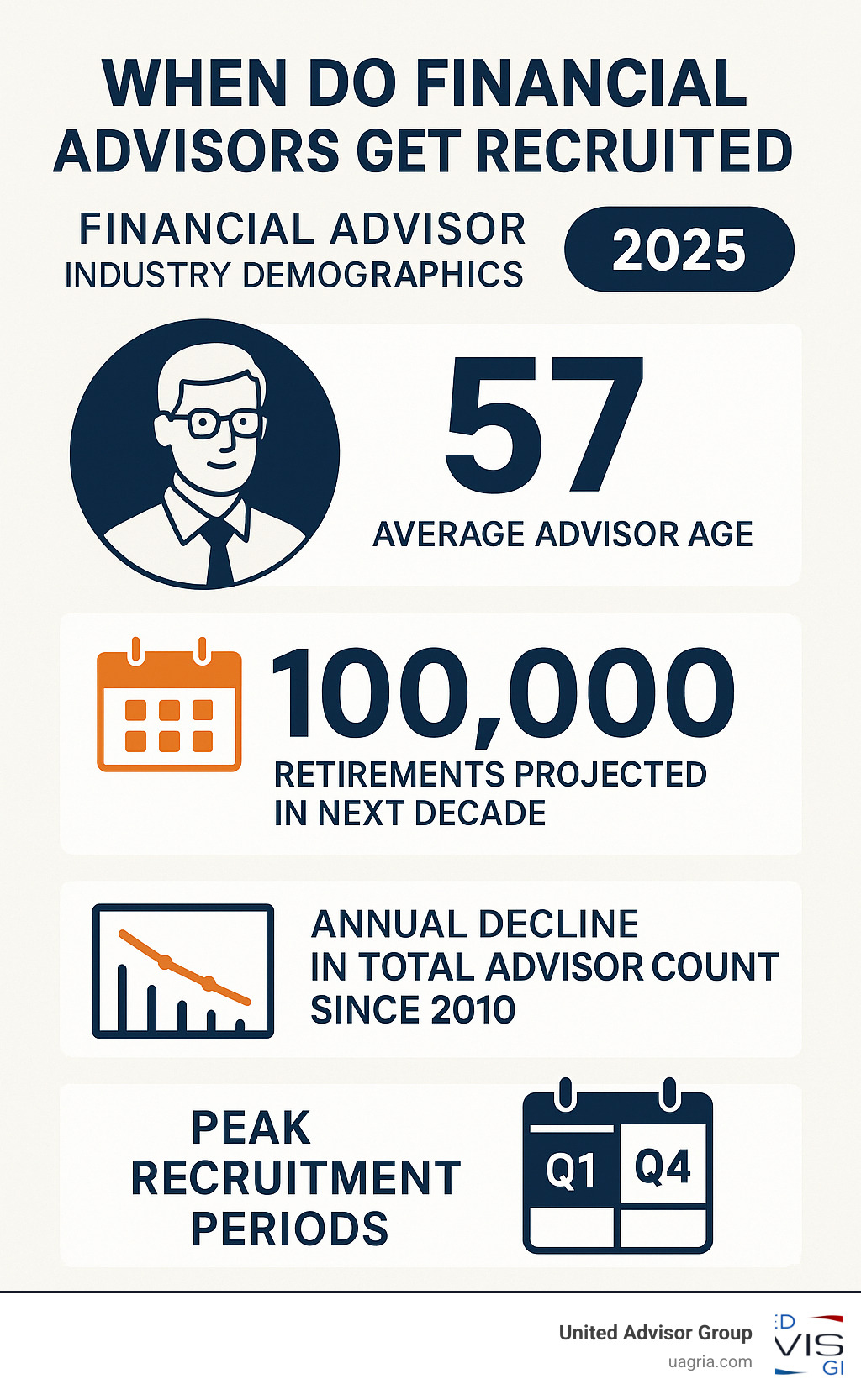
- Q1 (January-March): Post-bonus season when 90% of advisor moves happen
- Q4 (October-December): Pre-bonus conversations and planning phase
- Career transition points: Mid-career pivots, succession planning needs
- Market disruptions: Regulatory changes, firm restructuring events
Recruitment timing isn’t random. The average financial advisor is 57, with approximately 100,000 expected to retire in the next decade. Firms urgently need talent, especially since the total number of financial advisors has declined annually since 2010, making strategic timing critical.
Why advisors make moves when they do:
- Bonus cycles drive 90% of Q1 and Q4 departures
- Frustration with restrictive compliance and proprietary product pressure
- Desire for greater independence and client-first focus
- Need for better technology and back-office support
I’m Ray Gettins. My experience building United Advisor Group’s collaborative model has shown me exactly when do financial advisors get recruited and why. This understanding helps us attract elite advisors who seek true independence and meaningful collaboration.
Similar topics to when do financial advisors get recruited:
The “Why” and “When”: Key Triggers for Advisor Recruitment
Understanding when do financial advisors get recruited starts with why firms recruit. Recruitment needs aren’t sudden; they follow predictable patterns that smart firms recognize early.
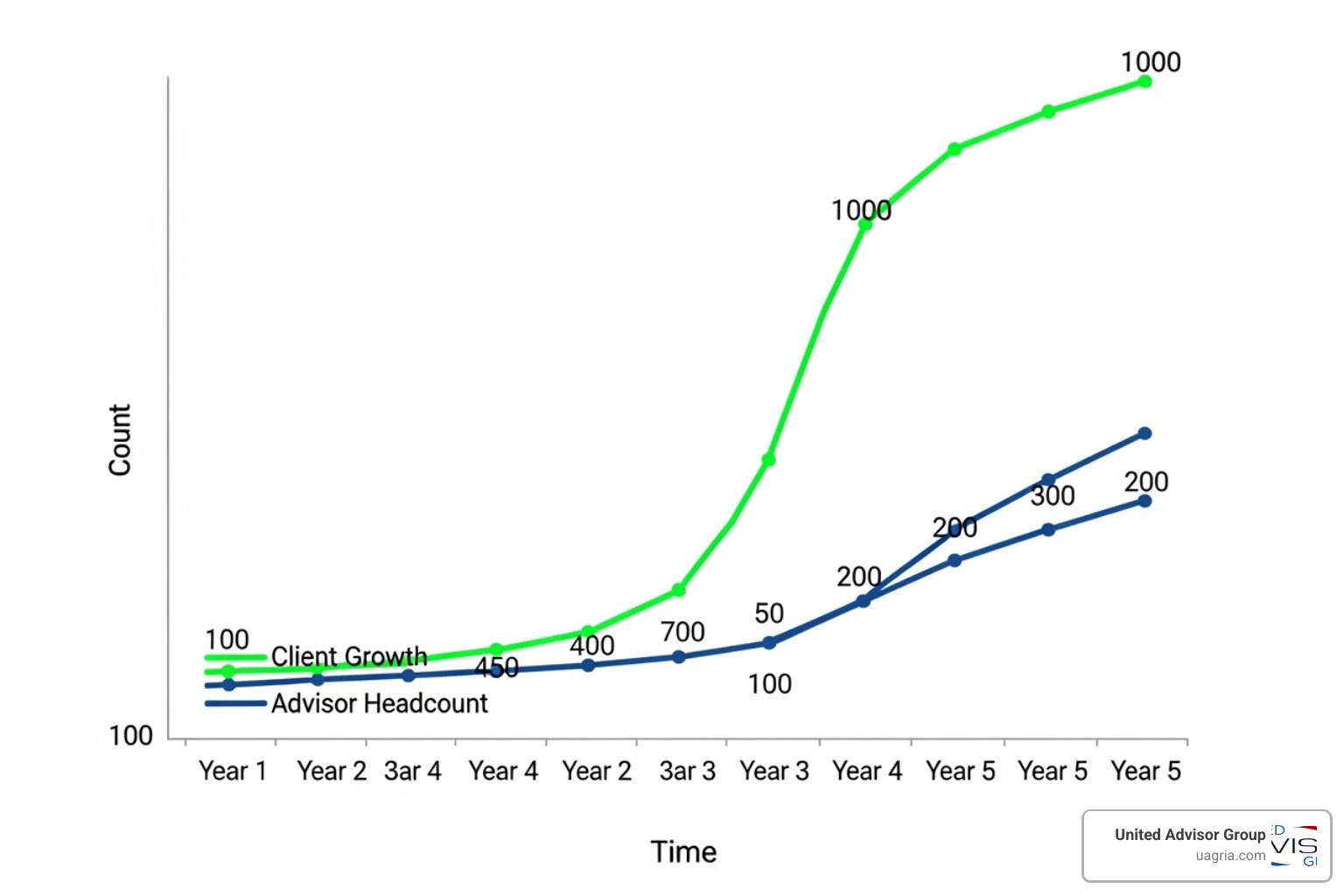
The most common trigger is client growth outpacing advisor capacity. If your team is stretched and service suffers, you’ve waited too long. Recruit proactively based on growth trends, not reactively when overwhelmed.
Succession planning is a major factor. With 100,000 advisors expected to retire over the next decade, firms not actively recruiting younger talent are planning to shrink. This is about preserving client relationships and institutional knowledge.
Strategic expansion into niche markets also drives recruitment. Serving high-net-worth families or specializing in retirement planning requires specific expertise your current team may not have.
Sometimes recruitment is necessary due to underperforming advisors or cultural mismatches. These situations create opportunities to upgrade your team with advisors who better align with your firm’s values.
Understanding Your Firm’s Hiring Needs
Before deciding when do financial advisors get recruited, clarify why you’re recruiting. It’s about strategic growth aligned with your firm’s mission and culture, not just filling seats.
Start with your growth goals. Are you hiring to serve existing clients, attract new ones, or enter specialized markets? Growth-minded investment advisors have clear plans that drive their recruitment timeline.
Your firm culture dictates when and who you recruit. At United Advisor Group, our model attracts advisors seeking independence and a client-first focus. Knowing your unique culture helps target the right candidates at the right time.
Operational capacity also matters. Can your back-office systems and support staff handle more advisors? Recruiting great talent only to frustrate them with poor infrastructure is a common mistake.
Your ideal candidate profile should go beyond technical skills to include personality traits and values that align with your client service philosophy.
Responding to the Great Retirement Wave
The numbers are stark: the average financial advisor is 57, and the number of financial advisors has fallen every year since 2010. The “Great Retirement Wave” is here.
The challenge is the knowledge transfer crisis. Without proper succession plans, decades of client relationships and industry wisdom are lost when advisors retire.
Smart firms respond with robust mentorship programs, pairing experienced advisors with younger talent to ensure business continuity. The key is starting before retirement is imminent.
For firms prioritizing advisor autonomy, this shift is an opportunity. Mid-career advisors are tired of bureaucracy and proprietary product pressure. They want an independent model to better serve their clients’ best interests. The firms that will thrive are those building talent pipelines now.
Decoding the Calendar: When Do Financial Advisors Get Recruited?
If you’re an advisor wondering when do financial advisors get recruited, it’s not just when firms need people. There’s a predictable industry rhythm you can use to your advantage.
The biggest factor is bonus cycles. A striking statistic shows about 90% of Financial Advisors will leave in the last or first quarter. This is no coincidence.
From an advisor’s view, you won’t walk away from an annual bonus. You wait, collect the check in January or February, then explore opportunities. This makes Q1 the absolute prime time for recruitment.
The process starts earlier. Q4 is for “pre-bonus conversations.” Smart firms build relationships in October and November, knowing advisors will be ready to move in January.
Beyond bonuses, tax season can be a natural breakpoint, and industry conferences create networking opportunities that spark recruitment conversations.
There’s a key difference between proactive and reactive searches. Reactive searches fill unexpected openings quickly. Proactive searches involve continuously building relationships with talented advisors, even without an immediate opening.
At United Advisor Group, we believe it’s always a good time to connect with a culturally-fit, entrepreneurial advisor. Still, understanding seasonal patterns helps firms and advisors make smarter timing decisions.

The Annual Recruitment Cycle: A Quarter-by-Quarter Breakdown
Here’s a quarterly breakdown of the advisor recruitment world.
Q1 is post-bonus prime time. January through March sees the highest volume of advisor moves. For advisors, it’s the perfect time to explore opportunities. For firms, it’s all hands on deck with aggressive outreach, fast interviews, and compelling offers to capture this talent wave.
Q2 shifts into planning and outreach. Smart firms use April through June to lay groundwork. They refine value propositions, define their culture, and start early conversations. It’s relationship-building season.
Q3 brings active sourcing. July through September is slower for immediate moves but perfect for deeper conversations about culture, autonomy, support, and long-term vision.
Q4 is all about pre-bonus conversations. The next cycle begins in October. Advisors are listening but not ready to move. Firms present their value proposition and build relationships that pay off in Q1.
When do financial advisors get recruited based on search type?
The timeline for when do financial advisors get recruited also depends on the role.
For client-facing advisor positions, speed is key. These roles are critical for Registered Investment Advisor Enhancing Client Relationships. Firms can often find candidates in 2-3 weeks with strong internal processes or in under 22 business days with search partners.
Executive-level hires need a different approach. Finding a Head of Wealth Management or COO requires about 60 days to properly canvas the market for top-tier talent. These strategic decisions can’t be rushed.
Contingent searches move faster, while retained searches take longer but often yield better-vetted candidates. For associate or entry-level roles, timing often ties to academic calendars.
Successful recruitment involves maintaining ongoing relationships with talented advisors. If you’re an advisor, the best time to explore options is before you need to move.
What Top Advisors Want: Crafting an Irresistible Offer
Knowing when do financial advisors get recruited is the first step. The real challenge is crafting an irresistible offer. Advisors today want more than a paycheck; they seek a place to build something meaningful, serve clients better, and enjoy their work.
Compensation matters. 28% of firms cite lower pay as a top reason for turnover. A practical tip: 70% of applicants want to see a salary range upfront. While the average base is around $80,832, it varies by location. Transparency builds trust.
But money opens the door, it doesn’t seal the deal. Top advisors want freedom and autonomy to run their practice without pressure to sell proprietary products or meet unrealistic sales targets.
Technology is a huge factor. Though 58% of executives think their tech is modern, 65% admit outdated software lost them business. Advisors want modern tools that help them serve clients, not outdated systems.
Robust back-office and marketing support is a game-changer. Advisors want to spend time with clients, not on compliance paperwork or administrative tasks.
Work-life balance has evolved. While 62% of financial advisors want to return to the office, the key is flexibility and choice that fits their lifestyle, not a rigid remote or in-person policy.
Culture is critical. A striking 90% of advisors say firm culture is important. They want a collaborative environment where they feel heard and valued.

Building a Compelling Offer Beyond the Paycheck
The best offers solve the real problems advisors face daily, which often go beyond money.
Genuine autonomy is paramount. Advisors are tired of proprietary product pressure. The Advisor Autonomy Benefits of a true fiduciary model, where client interests come first, resonate deeply.
Equity opportunities transform an advisor’s career trajectory, offering a path to ownership and showing a commitment to a long-term partnership.
Clear career paths are crucial. 78% of employees would stay if they knew their career path, yet many get little feedback. Advisors want to know their trajectory.
Mentorship programs offer invaluable support for transitioning advisors or those looking to grow. Access to experienced professionals can accelerate success.
A client-first culture is what many advisors desperately seek. They want to help people, not hit sales quotas.
Progressive benefits complete the package. According to MetLife, 59% of professionals say benefits influence their decision to stay with a company. This includes health plans, flexibility, and continuing education.
Being transparent about the Insights on Costs Involved in Becoming an RIA demonstrates genuine partnership.
When do financial advisors get recruited based on career stage?
The timing and motivation for when do financial advisors get recruited shifts by career stage. Understanding these differences allows for more targeted recruitment.
Early-career advisors (0-5 years) need mentorship, clear income expectations, and comprehensive training. With 71% leaving the industry in five years due to inadequate support, they seek firms that provide stability.
Mid-career advisors (5-20 years) move during bonus seasons (Q1, Q4) or when they hit a growth ceiling. They want better technology, more autonomy, and collaborative cultures to better serve their established clients. Many are also exploring Understanding Independent Fiduciary Virtual Family Office Roles.
Late-career advisors (20+ years) move when considering succession planning. They want fair practice valuations, seamless client transitions, and phased retirement options. Their focus is on legacy and ensuring clients are cared for.
Modern Recruitment Strategies: Attracting Talent in a Competitive Market
Posting a job ad and waiting is no longer enough. Today, when do financial advisors get recruited depends on reaching them effectively and speaking to their needs. In a competitive market, a strategic and authentic approach is vital.
Existing professional networks are invaluable. The best hires often come from connections like estate attorneys or CPAs. We encourage our advisors to tap their centers of influence and attend local meetups. Peer referrals carry built-in trust.
A strong digital presence is mandatory. Your online presence is your digital handshake and first impression. We showcase thought leadership, client success stories, and our values. A clear “Join Us” page on our website explains who we are and why advisors should care.
LinkedIn is a key tool for strategic outreach. We engage authentically by sharing insights on advisor autonomy, commenting on industry discussions, and showcasing our culture. Adding value to conversations gets us noticed.
University partnerships are crucial since only 5 percent of advisors are younger than 30. We attend career fairs and offer paid internships with real experience. This helps us identify future talent early.
Niche job boards for financial advisors often yield better results than general sites, as they attract serious candidates.

The Role of Technology and Transparency
Technology and transparency are essential in modern recruitment for building trust from the first interaction.
We use technology to streamline recruitment. Applicant Tracking Systems and virtual interview platforms help us manage candidates efficiently. We also invest in growth-focused software that improves advisor and client experiences, a major selling point, especially since 65% admit that outdated software had lost them business.
Radical transparency is our philosophy. We are upfront about fees, expectations, compensation, and the day-to-day reality. Honesty upfront prevents frustration and turnover later.
Setting clear expectations is key for successful transitions. New hires understand their role, responsibilities, and our culture before starting. This transparency leads to more RIA Transition Success Stories That Motivate Lasting Change.
Attracting the Next Generation of Financial Advisors
Attracting younger talent is critical for survival. This generation has different expectations.
We must address the trust issue. With many Millennials skeptical of financial advice, we build trust through authenticity and showcasing our impact, not sales pitches.
Purpose matters to younger advisors. They want to make a difference. We emphasize our fiduciary approach and share stories of how we help clients achieve life goals.
Structured training programs are non-negotiable. We provide intensive training and higher base salaries, avoiding commission-only models that often lead to failure.
Mentorship and clear career paths are crucial. 78% of employees would stay with their current employer if they knew their career path. We provide professional development, mentorship, and transparent progression.
Frequently Asked Questions about Financial Advisor Recruitment
What is the single most important time of year to recruit financial advisors?
The busiest period when do financial advisors get recruited is Q1, right after annual bonuses are paid. Advisors have their compensation and are free to explore new opportunities without leaving money on the table. Statistics show 90% of advisor moves happen in the last or first quarter.
However, the most effective firms don’t wait for Q1. They build relationships year-round. Smart firms use Q2 and Q3 for planning and Q4 for meaningful conversations, positioning themselves as the top choice come January.
How can a smaller or independent firm compete for top talent?
This question reveals a misunderstanding of what top advisors want. Smaller and independent firms aren’t at a disadvantage; they often have the biggest advantages.
While large institutions have bureaucracy and product pressure, we offer genuine freedom. The Advisor Autonomy Benefits we provide are daily realities that transform client service.
We compete on authenticity. Our culture is real, personal, and nimble. Advisors talk directly to decision-makers, not layers of middle management.
We offer clear paths to ownership. This provides real skin in the game, which is more compelling than vague partnership tracks.
Most importantly, we promise the ability to truly put clients first. This means no sales quotas, no proprietary product pressure, and no conflicts of interest—just pure fiduciary responsibility.
What is the biggest mistake firms make in the recruiting process?
The biggest mistake is a lack of transparency. It’s like building a house on sand; it looks good initially but eventually collapses.
Firms often misrepresent their culture, workload, or technology. Promising a manageable client load that turns out to be overwhelming or “cutting-edge” tech that is outdated leads to burnout and frustration.
Compensation transparency is critical. 70% of applicants want salary ranges upfront. When firms are not transparent, trust erodes immediately.
Honesty attracts the right people. Being transparent about compensation, technology, support, and even our challenges attracts advisors who are a genuine fit. Successful long-term recruiting is about finding the perfect match, not selling a dream. Radical honesty leads to advisors who thrive.
Conclusion
Understanding when do financial advisors get recruited is more than marking dates on a calendar; it’s about a complete, advisor-first strategy. Successful recruitment starts with knowing why you need new talent, whether for client growth, succession planning, or market expansion.
The timing is clear: Q1 is the golden window for advisor moves, post-bonus. But the smartest firms build relationships year-round, having conversations in Q4 and staying connected through the summer.
What truly makes a difference is understanding what advisors want today. Beyond a paycheck, they seek genuine autonomy, modern technology, and a client-first culture free from sales quotas and product pushes.
The industry is at a crossroads. With the average advisor age at 57 and a massive retirement wave coming, firms that master the “when” and “what” of recruitment will gain a huge advantage. Outdated approaches will fail.
At United Advisor Group, our model is built on true independence and unwavering client focus. We remove barriers like proprietary products and micromanagement, giving you the freedom to build your ideal practice.
Ready to see what that freedom could mean for your bottom line? Our calculator shows you exactly how much more you could earn by making the move to true independence. And if you’re curious about the transition process, see how we’ve solved the Key Problems When Moving to RIA from Broker-Dealer.
The question isn’t really when do financial advisors get recruited—it’s when will you take the step toward the practice you deserve?