

Why Virtual Office Setup is Essential for Modern Advisory Practices
Virtual office setup provides financial advisors with a professional business presence without the overhead costs of traditional office space. Here’s what you need to know:
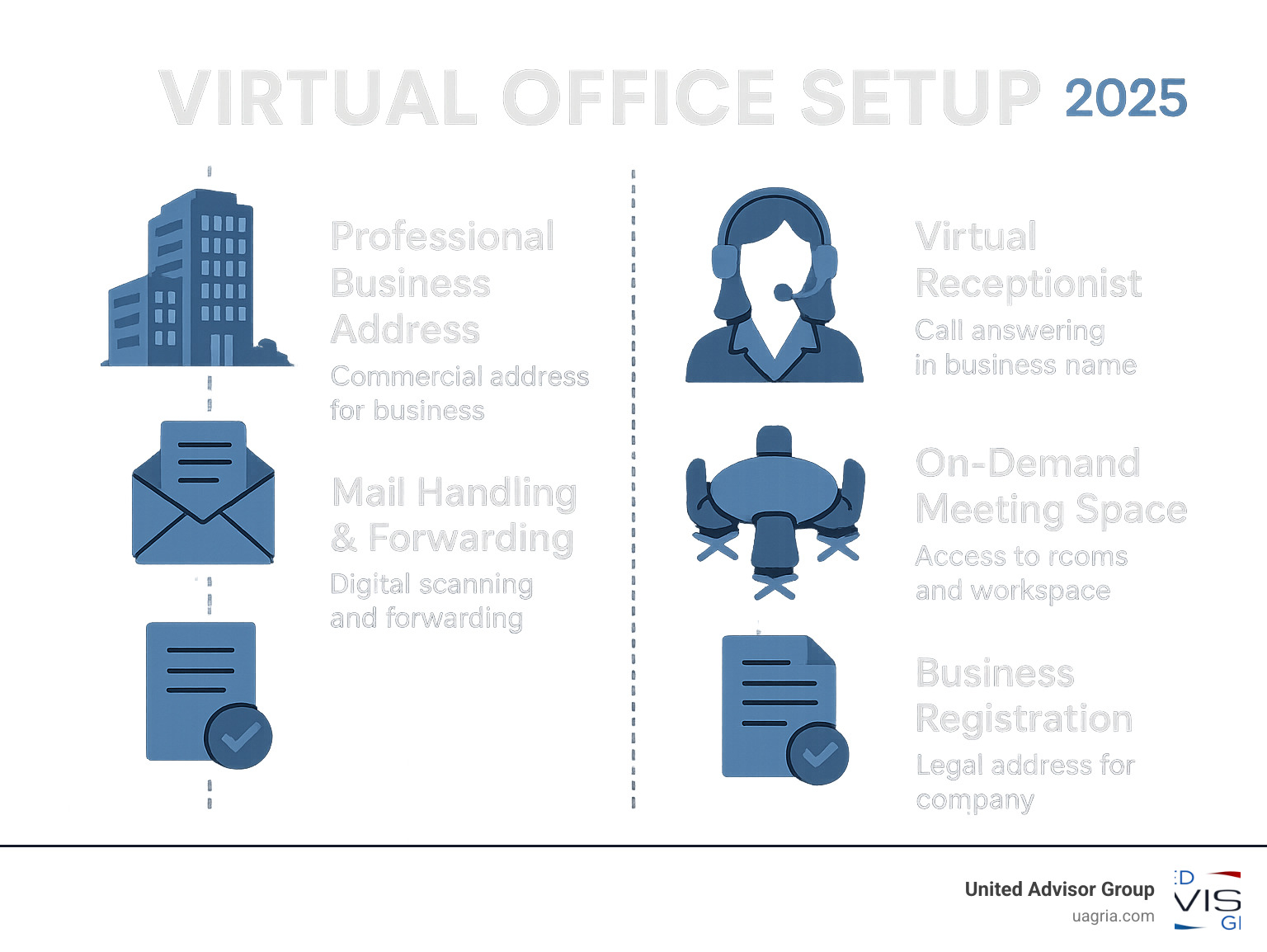
Key Components of a Virtual Office Setup:
- Professional Business Address – Prestigious commercial address for credibility
- Mail Handling & Forwarding – Digital scanning and forwarding services
- Virtual Receptionist – Professional call answering in your business name
- On-Demand Meeting Space – Access to conference rooms when needed
- Business Registration – Legally compliant address for official documents
The shift toward remote work has made virtual offices increasingly popular among financial advisors seeking independence. As one industry expert notes, “Virtual offices eliminate the high costs associated with renting, furnishing, and maintaining traditional office spaces” while providing the professional image clients expect.
For financial advisors breaking away from restrictive broker-dealers, a virtual office setup offers the perfect solution to maintain credibility while dramatically reducing overhead. Virtual offices typically cost between $49-$195 per month in Canada, compared to thousands for traditional office space – allowing you to redirect those savings toward growing your practice and better serving clients.
The benefits extend beyond cost savings. A virtual office provides the privacy protection you need, keeping your home address off public records while establishing your firm in a prestigious business district. This professional presence builds client trust and supports your transition to true independence.
I’m Ray Gettins, Director at United Advisor Group, where we help exceptional advisors build thriving independent practices through collaborative support and flexible solutions. Having worked with countless advisors through their virtual office setup and transition to independence, I understand the unique challenges and opportunities this decision presents.
Virtual office setup further reading:
What is a Virtual Office and Why is it a Game-Changer for Financial Advisors?
A virtual office setup is a service that provides your business with a professional address and office-related services without the long-term lease and high overhead of a traditional office. Imagine meeting a high-net-worth client; a prestigious business address instills confidence, whereas a home address can raise questions about your firm’s stability. This is the core value of a virtual office for independent financial advisors.

With a virtual office, you get the credibility of a prime business location, professional mail handling, dedicated phone answering, and access to meeting rooms on-demand, all while working from anywhere. Your provider receives and scans your mail, a receptionist answers calls in your business name, and you can book a conference room whenever you need to meet clients in person.
Key Benefits and Core Services
A virtual office setup delivers value across multiple dimensions that directly impact your success:
- Massive Cost Reduction – The financial impact is remarkable. A traditional office can cost $4,000 to $8,000 monthly, plus utilities and furnishings. A virtual office typically runs between $49 and $195 per month, freeing up significant capital to reinvest in marketing, technology, or client services.
- Instant Credibility and Professional Image – A prestigious business address in a financial district instantly boosts your firm’s credibility. It signals stability and professionalism, which can be the deciding factor for potential clients.
- Essential Privacy Protection – Keep your home address off public records, business registrations, and client communications. This protects your family’s safety and maintains a professional boundary.
- Flexibility and Scalability – A virtual office aligns perfectly with the modern advisory practice. As your firm grows, you can easily upgrade services or add locations without the hassle of relocating. This flexibility supports the Advisor Autonomy Benefits that make independence so attractive.
- Business Registration Legitimacy – Use your commercial virtual office address for all official purposes, including regulatory filings and bank account openings, ensuring you are fully compliant.
- Improved Work-Life Balance – By eliminating a commute and rigid office hours, you can structure your day around client needs and personal priorities, leading to greater satisfaction and better service.
These services integrate seamlessly to create a professional infrastructure that rivals a traditional office at a fraction of the cost, providing the efficiency and flexibility essential for a thriving independent practice.
The Essential Guide to Your Virtual Office Setup
Setting up your virtual office setup is a straightforward process that lays the foundation for your independent practice. Follow these steps to create a professional framework that grows with your business.

Step 1: Map Out Your Business Needs
Before choosing a provider, create a clear plan. A solid business plan acts as your roadmap. For guidance, check out these tips on writing a business plan.
- Assess Your Goals – Are you planning for rapid growth or a boutique practice? Your virtual office should support your ambitions.
- Define Client Interaction – Will you meet clients in person often, requiring meeting room access, or primarily connect digitally?
- Set a Realistic Budget – Determine what you can afford monthly. Start with essential services and add more as your practice grows.
- Identify Core Services – Do you need a live receptionist, or is mail handling sufficient? Be honest about your requirements. Consider how a model like Collaborative Financial Planning might shape your needs.
Step 2: Choose a Provider and Secure Your Address
Your provider is a key partner. Choose carefully.
- Research Reputable Providers – Look for companies with positive reviews from other financial professionals.
- Prioritize Security and Reliability – Ask about their security protocols for mail and data, staff training, and system uptime.
- Confirm Commercial Zoning – Ensure the address is a legitimate commercial street address suitable for business and regulatory registration.
- Review Service Agreements – Check for hidden fees, contract terms, and cancellation policies. Flexibility is often key for an independent advisor.
- Select a Prestigious Location – Your address appears on all business materials. A location in a recognized business district boosts credibility and client trust.
Step 3: Establish Your Tech and Communication Stack
Technology makes your virtual office functional. Your tech stack should be secure, integrated, and scalable.
- VoIP Phone System – Get a professional business number that can be answered on any device, with features like call forwarding and voicemail transcription.
- CRM Software – Organize client interactions, manage follow-ups, and track important deadlines to maintain high service standards.
- Secure Cloud Storage – Use solutions with strong encryption and access controls to protect sensitive client data.
- Video Conferencing Tools – Choose a reliable platform for virtual client meetings, with features like screen sharing and recording.
- Cybersecurity Measures – Implement antivirus software, firewalls, and a VPN. A security breach can destroy client trust.
- Ergonomic Home Office – A comfortable, well-designed workspace improves productivity and health. PC Magazine offers a great guide to setting up an ergonomic home office.
This integrated approach transforms your virtual office setup from a mailing address into a powerful platform for growing your independent practice.
Navigating Business Registration with a Virtual Office
A common question from advisors is whether a virtual office setup is legitimate for business registration. The answer is yes. You can use a commercially zoned virtual office address to register your business, obtain licenses, and open bank accounts. It’s a smart move for advisors transitioning to independence.

The key is that the address must be a real commercial street address, not a P.O. Box. This is a requirement for government agencies, banks, and regulatory bodies. As a financial advisor, you must also verify specific requirements with regulators like the SEC or FINRA.
Legal Requirements and Key Considerations
Before registering, address these critical legal points:
- Commercial Zoning Verification – Always confirm your chosen address is in a commercially zoned area recognized for business registration. This ensures regulatory compliance.
- Industry-Specific Regulations – The SEC, FINRA, and state regulators have specific rules for registered addresses. Ensure your setup complies with all financial services requirements. Resources on Understanding Independent Fiduciary Virtual Family Office Roles can provide further insight.
- Service of Process – Your business needs a registered agent to receive legal documents. Confirm if your virtual office provider offers this service or if you need to arrange it separately.
- Data Security – Vet your provider’s security policies for mail handling and data storage. Protecting client information is paramount.
- Bank Account Requirements – Most banks accept virtual office addresses, but it’s wise to be transparent about your setup to ensure a smooth process.
A Step-by-Step Registration Guide
Follow this roadmap to register your business with a virtual office setup:
- Confirm Address Eligibility – Contact your state’s Secretary of State and relevant financial regulators to verify your chosen address meets their requirements.
- Gather Documents – Prepare personal identification and business formation documents (e.g., articles of incorporation).
- Submit Your Application – Register your business and obtain an EIN from the IRS (or a Business Number from the CRA in Canada). Use your virtual address consistently on all forms.
- Obtain Licenses – Apply for all necessary federal and state financial licenses, ensuring your address meets the criteria for these specialized permits.
- Set Up Mail Management – Coordinate with your provider on how to handle incoming mail, especially official correspondence from regulatory bodies.
Once complete, you have a fully legitimate, professional business presence without the high costs of a traditional office, freeing you to focus on serving clients.
Understanding Virtual Office Costs vs. Value
Understanding the financial impact of a virtual office setup is crucial when considering independence. The numbers tell a compelling story about profitability.
Virtual offices in North America typically cost between $49 and $195 per month. Compared to traditional office space, which can run $4,000 to $8,000 monthly in major cities, the savings are immense.
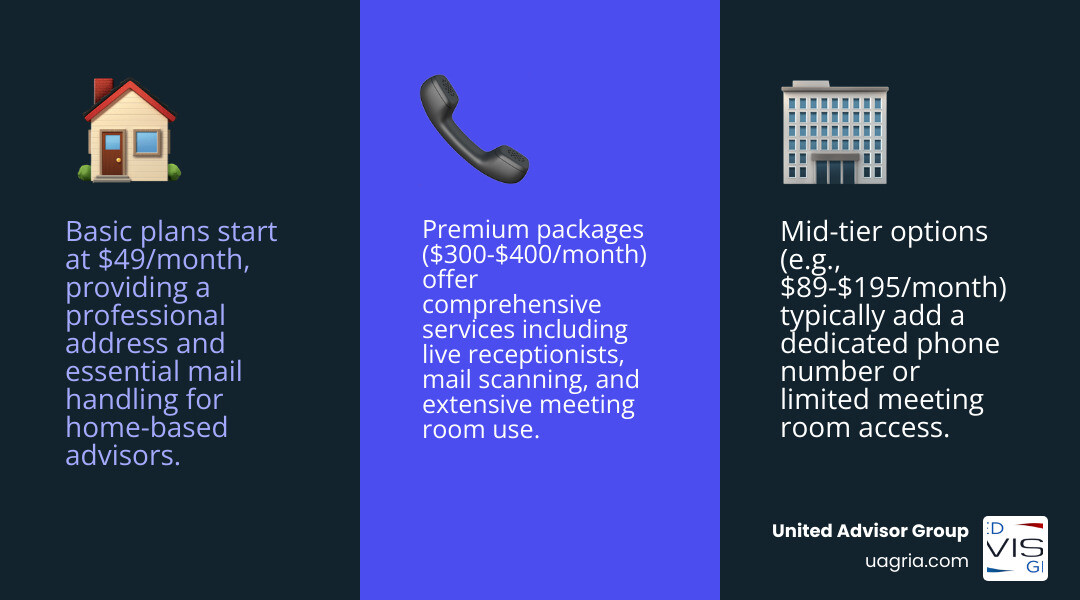
- Basic Plans (~$49/month) – Include a professional business address and mail handling. Ideal for home-based advisors needing a credible presence.
- Mid-Tier Plans (~$100-$150/month) – Add a business phone number with call answering and some meeting room access. A popular choice for advisors who occasionally meet clients in person.
- Premium Plans (~$195-$300/month) – Offer comprehensive support, including extensive meeting room hours and administrative services.
Always read the fine print to avoid surprise fees for services like mail forwarding or extra meeting room time.
Calculating your return on investment (ROI) is eye-opening. Traditional office expenses can easily exceed $60,000 annually. A premium virtual office setup costs less than $4,000 yearly, creating immediate savings of over $50,000. This capital can be redirected toward client acquisition, technology, or your own income.
The long-term value is even greater. Without a lease, you can scale services as your practice evolves, maintaining geographic flexibility while projecting a professional image that builds client trust.
For advisors considering independence, these savings are just one piece of the puzzle. Reduced overhead, combined with higher payouts and greater autonomy, can dramatically boost your earning potential. Access the UAG calculator to see how much more you could earn—the results might surprise you.
Frequently Asked Questions about Virtual Offices
When advisors consider independence, questions about virtual office setup are common. Here are answers to the most frequent concerns.
Can I legally register my financial advisory firm using a virtual office address?
Yes. In most jurisdictions, you can legally register your firm using a virtual office address, provided it is a real commercial street address and not a P.O. Box. For financial advisors, it is crucial to verify that the address complies with regulations from bodies like the SEC or FINRA. In Canada, for example, a virtual office address is suitable for obtaining a Business Number (BN) from the CRA.
How does a virtual office protect my privacy as a business owner?
A virtual office setup is one of the best ways to protect your privacy. It provides a professional business address for public records, your website, and client communications, keeping your home address completely private and secure. This separation is vital for your safety and for maintaining a professional boundary with clients.
What is the difference between a virtual office address and a P.O. Box?
This is a key distinction. A virtual office provides a real street address at a commercial building, which is required for most business registrations and adds credibility. A P.O. Box is just a mailbox at a post office and is often viewed as less professional. Virtual offices also offer a suite of services like receptionists and meeting rooms that a P.O. Box cannot.
How do I set up a virtual office business?
The process is simple. First, research and choose a reliable virtual office provider in your desired location. Select a plan that fits your needs (e.g., mail handling, call answering). Once you sign up, you can immediately use the address for business registration, bank accounts, and all professional correspondence. You can be up and running in days, not months.
How much does a virtual office cost in Canada?
A virtual office setup is highly affordable. In Canada, basic plans start around $49 per month, with comprehensive packages ranging from $195 to $400 monthly, depending on the city and services included. Even at the high end, this is a fraction of the cost of a traditional office.
To see how these savings contribute to your overall earnings as an independent advisor with United Advisor Group, use our calculator to find the financial benefits of making the switch.
Where should I register my business in Canada?
This depends on your goals. If you plan to operate in a single province, provincial registration is sufficient. If you have national ambitions, federal registration through Corporations Canada offers broader protection and flexibility. In either case, you will need to register with the CRA for a Business Number (BN), and your virtual office setup address is perfect for all these registrations.
Conclusion
Your journey toward independence doesn’t have to be overwhelming, and a virtual office setup proves that point beautifully. It’s not just about cutting costs – though saving thousands of dollars annually certainly doesn’t hurt – it’s about creating the foundation for the practice you’ve always wanted to build.
Think about it: with a virtual office setup, you get everything that makes clients trust you – that prestigious business address, professional call handling, secure mail services, and meeting spaces when you need them. But you also get something traditional offices can’t offer: true freedom. Freedom to work from anywhere, freedom to structure your day around your clients’ needs, and freedom from the financial burden of expensive overhead.
The privacy protection alone is worth the investment. Your home address stays private, your family stays safe, and you maintain that crucial professional boundary that helps you sleep better at night.
Professionalism meets cost-efficiency in ways that seemed impossible just a few years ago. Flexibility becomes your competitive advantage rather than a nice-to-have perk. And suddenly, that dream of running your own independent practice feels not just possible, but inevitable.
At United Advisor Group, we’ve watched countless advisors make this transition successfully. We know the challenges you’re facing – the compliance headaches, the proprietary product pressures, the feeling that you’re not truly serving your clients’ best interests. A virtual office setup removes many of these barriers while giving you the professional presence you need to thrive.
The numbers speak for themselves, but more importantly, so do the advisors who’ve made the leap. They’re happier, more profitable, and finally able to practice financial planning the way it should be practiced – with complete focus on their clients.
Ready to see what independence could mean for your bottom line? See how much you could gain by going independent. Use our calculator to see the financial benefit of joining United Advisor Group. You might be surprised by just how much you’ve been leaving on the table.