

Why Advisors Leave Broker Dealer
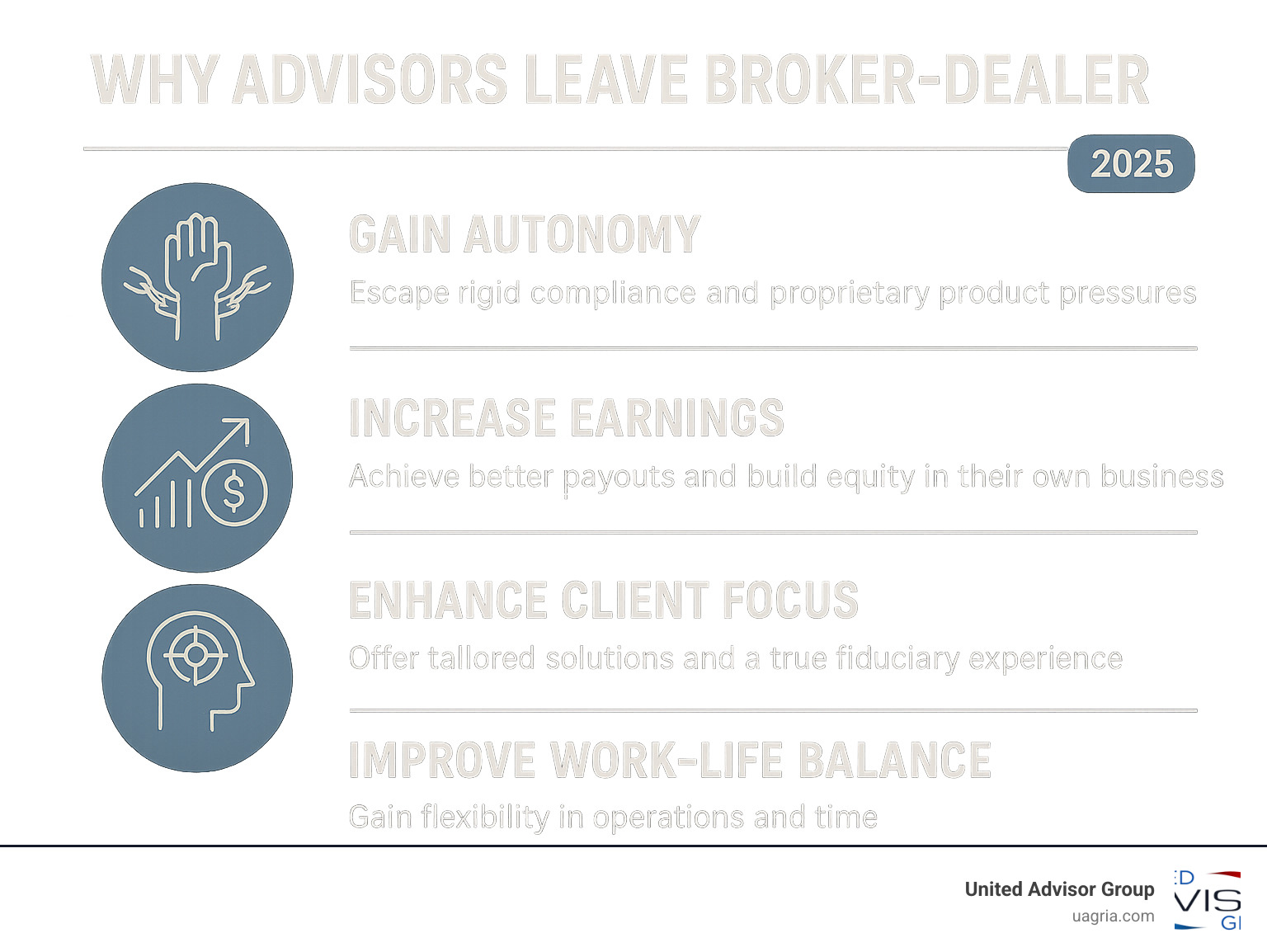
If you are considering to leave broker dealer, you’re likely looking for greater control, better financial outcomes, and the freedom to serve clients your way. Advisors often make this move to:
- Gain Autonomy: Escape rigid compliance and proprietary product pressures.
- Increase Earnings: Achieve better payouts and build equity in their own business.
- Improve Client Focus: Offer custom solutions and a true fiduciary experience.
- Improve Work-Life Balance: Gain flexibility in operations and time.
The momentum towards independence is accelerating as more advisors seek entrepreneurial freedom, a client-first approach, and the chance to build a valuable business asset. In fact, nearly 80% of advisors who make this shift report a better life, with many finding the transition easier than they expected.
As Director at United Advisor Group, I’ve helped countless advisors steer the decision to leave broker dealer, and I understand both the challenges and rewards of this journey.
Leave broker dealer terms explained:
The Allure of Independence: Why Advisors Choose to Go It Alone
The decision to leave broker dealer is often an entrepreneurial leap. It’s driven by a desire to build a valuable business asset, not just a book of clients within a larger corporation. This shift comes with a renewed commitment to a true fiduciary duty, free from the pressures of proprietary products or sales quotas. Operating as an independent RIA brings tangible advantages:
- Better Economics: The financial upside can be substantial.
- Improved Work-Life Balance: Greater control over your schedule and operations.
- Self-Directed Tech Stack: You choose the technology that best serves your practice and clients.
- Client-First Approach: Offer a wider range of investment solutions without institutional constraints.
A 2020 TD Ameritrade survey found that 78% of advisors who moved to the independent RIA channel reported a better life. For many, it’s not just a career change; it’s a life upgrade.
Gaining Full Control and Flexibility
A compelling reason to leave broker dealer is the desire for autonomy. Many advisors feel stifled by burdensome compliance and a lack of operational flexibility. As an independent RIA, you gain the freedom to:
- Customize Client Service: Design your client experience to align with your unique vision.
- Unrestricted Investment Offerings: Access a vast universe of investment solutions. This means No Proprietary Products getting in the way of what’s best for your clients.
- Build Your Own Brand: Create your own identity, mission, and culture to attract clients who resonate with your values.
This control allows you to build a practice that reflects your standards and delivers the best possible service.
The Economic Case for Leaving Your Broker-Dealer
The financial implications are a significant driver to leave broker dealer. The economic benefits of the independent RIA market are very real.
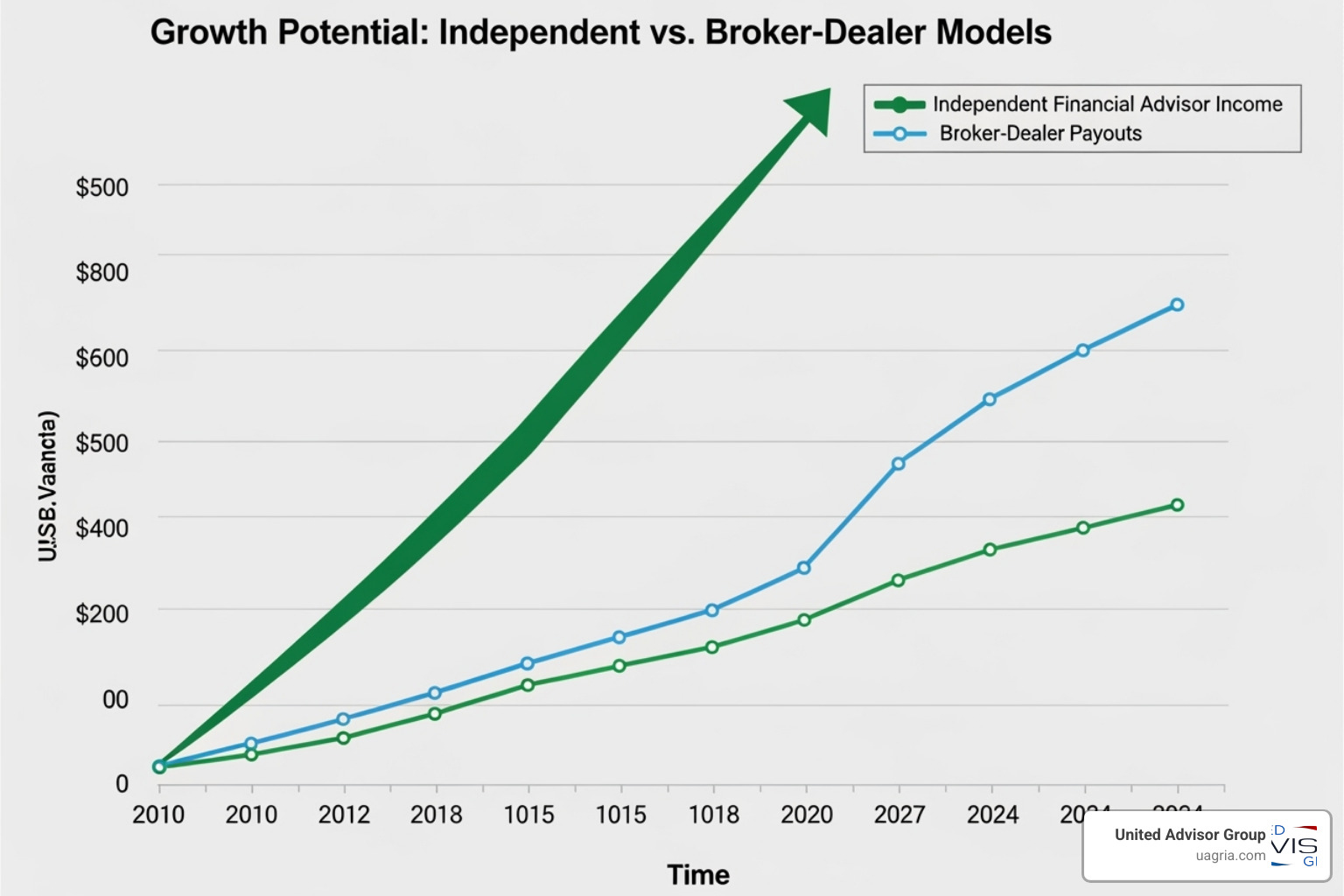
- Higher Payouts: Broker-dealer payouts are often around 40% of revenue. As an independent RIA, you eliminate the middleman. One advisor reported a 20% increase in take-home pay after the switch, while another replaced a 30% all-in expense with a 10% cost at their RIA.
- Fee-Based Compensation: This model allows you to be compensated for advice, not just transactions, aligning your interests more closely with clients.
- Lower Overhead: You replace the broker-dealer’s high overhead with a more streamlined, cost-effective structure. 70% of independent advisors surveyed said that moving from their employers’ brand helped their bottom line.
- Building Equity: You are building a business with long-term asset value. An independent RIA practice is a saleable asset and a legacy you truly own.
The economic freedom and potential for improved financial outcomes are powerful incentives to make the leap.
The Legal and Regulatory Playbook for a Clean Break
When you leave broker dealer, the legal landscape can seem intimidating. The key is understanding transition protocols, Form U5 filings, potential Temporary Restraining Orders (TROs), non-solicitation agreements, and client data privacy rules. These are the guardrails for your transition. FINRA rules and SEC Regulation S-P, which governs the privacy of consumer financial information, set the foundation for this process.

Understanding Transition Protocols
The Broker Protocol can be a major asset if both your current and new firms are members. This agreement, with nearly 2,500 members as of May 2024, was designed to reduce legal disputes during advisor transitions. Under the Protocol, you can take specific client information: names, physical addresses, email addresses, phone numbers, and formal account titles. You cannot take account numbers or other confidential financial details.
Your resignation requires a written letter to your manager stating your intent to follow Protocol rules and listing the client information you are taking. Pay close attention to any team agreements, as they can sometimes override standard Protocol rules.
The most important advice is to get legal counsel involved early. An experienced securities attorney can review your agreements and help you steer the process smoothly, as detailed in Transition Protocols Explained.
Navigating Form U5 and Avoiding Legal Disputes
When you leave broker dealer, your firm files a Form U5 termination notice with FINRA, which becomes part of your public BrokerCheck record. The language used is critical; “Discharged” raises more red flags than “Permitted to Resign,” and can trigger FINRA investigations. Some advisors are blindsided by negative disclosures on their U5.
If your firm includes false information, you can seek an expungement or amendment with legal help.
TROs are another concern, especially with non-Protocol firms. These legal orders can prevent you from contacting clients. The best defense is careful behavior before you resign: avoid sending firm information to personal accounts or storing client data on personal devices.
FINRA’s jurisdiction continues for at least two years after you leave broker dealer. The formal resignation process requires electronic filing and settling all debts with FINRA, as outlined in their Resignation of Members | FINRA.org guidelines. Document everything, follow the rules, and rely on legal counsel for a clean break.
Your Step-by-Step Transition Plan
While the decision to leave broker dealer can feel overwhelming, 75% of independent advisors found the transition easier than they expected. The secret is a clear roadmap. With proper planning, your transition can be smooth. Key elements include due diligence, a solid business plan, choosing the right custodian and technology, setting up your RIA, a clear client communication strategy, and managing account transfers (ACATs) efficiently.

Pre-Resignation: Laying the Groundwork
The most successful transitions begin long before resignation day. This groundwork phase typically takes 90-120 days.
- Financial Preparation: Secure a financial cushion to cover startup costs and personal expenses.
- Consult an Attorney: This is your first move. A securities law specialist will review contracts and guide you through Broker Protocol requirements.
- Choose Your Business Model: Decide whether to go fully independent, join a hybrid structure, or partner with an established group like United Advisor Group.
- Set Up Your Legal Entity: Your attorney will help incorporate your business, get an EIN, and establish business banking.
- Select Technology and Custodian: You finally get to choose the best tools for your practice. Interview custodians to find the right fit; many have no asset minimums for new RIAs.
- Prepare Your Client Approach: Strengthen relationships with top clients through personal touches. These connections are the foundation of your retention strategy.
Your Communication Plan When You Leave a Broker-Dealer
How you communicate with clients after you resign determines your success. One advisor reported that 99% of their clients followed them within 45 days, a testament to strong relationships and smart communication.
- Resignation Day: Be professional and brief. Follow your attorney’s guidance and be prepared to leave the office immediately.
- Announce Your Move: Once you’re no longer associated with your old firm, you can announce your move. Your message should be confident and focus on client benefits.
- Explain the Benefits: Share your excitement about the improved service you can now provide: increased flexibility, expanded investment options, and a stronger fiduciary commitment. Frame this as Registered Investment Advisor: Enhancing Client Relationships.
- Handle Paperwork Smoothly: Have account transfer paperwork (ACATs) ready. A smart tip is to pre-convert direct business to ACAT-eligible accounts before the move, which can dramatically speed up transfers.
- Set Expectations: Be honest about the timeline and any temporary inconveniences. Your clients chose to work with you, and that relationship is what matters most.
Overcoming Common Problems When You Leave a Broker-Dealer
The path to leave broker dealer has challenges, but they are solvable. Common issues include transition costs, compliance, operations, and client inertia. These are temporary speed bumps, not roadblocks. Thousands of advisors have solved these problems, and the solutions are well-documented. We’ve compiled insights on Key Problems When Moving to RIA from Broker Dealer to help you prepare.

Managing the Financial and Operational Shift
Worrying about startup costs is natural, but the reality is manageable. One advisor shared their total launch cost was under $10,000. This typically covers legal fees, registration, compliance development, and initial tech subscriptions. You will also need to budget for E&O insurance and compliance software, but modern solutions can streamline these obligations.
Your office space and staffing decisions are your own. Many advisors start lean from a home office and scale up as their practice grows. Leveraging outsourcing options like Turnkey Asset Management Platforms (TAMPs) is also a smart move. TAMPs can handle investment management, trading, and reporting, freeing you to focus on client relationships. This approach helps manage the Insights on Costs Involved in Becoming an RIA while maintaining high service standards.
Ensuring a High Client Retention Rate
Keeping clients happy during the transition is crucial. While some advisors report 99% client retention rates, success depends on executing your plan well.
- Proactive Communication: Months before your move, have deeper conversations with clients. Conduct thorough reviews and plant seeds about future service improvements. This strengthens the relationships you’ve already built.
- Highlight Your Value: Help clients understand why your independent practice will serve them better, whether through the elimination of proprietary products, more personalized service, or better investment options.
- Make Transfers Seamless: Have paperwork ready, provide clear instructions, and be available for questions. Pre-converting direct business to ACAT-eligible accounts can dramatically speed up transfers.
- Reinforce Relationships: Your clients chose you, not your broker-dealer. Remind them of this through your actions and continued commitment to their financial success. Strong personal connections make the transition a natural evolution of your relationship.
Frequently Asked Questions about Leaving a Broker-Dealer
When advisors consider the move to leave broker dealer, a few key questions always come up. Here are straight answers based on real-world experiences.
How much does it really cost to start my own RIA?
Many advisors successfully launch their independent RIA for under $10,000. You can build a lean, smart operation. Key startup costs include:
- Legal and Compliance Fees: For setting up your entity, filing your Form ADV, and creating your compliance manual.
- Registration Fees: State or SEC registration fees are typically just a few hundred dollars.
- Technology Stack: Monthly subscription costs for software you choose, often with tiered pricing that lets you scale.
- E&O Insurance: Essential professional liability coverage.
Many advisors start from a home office to keep initial overhead low. You’re trading the broker-dealer’s hefty overhead for a streamlined operation you control.
Can I take my clients with me if my firm has restrictive agreements?
The answer depends on your employment agreements and the Broker Protocol, which is why experienced legal counsel is essential. Non-solicitation clauses may prohibit you from actively contacting former clients. If your firm is not in the Broker Protocol or you violate its terms, they might seek a Temporary Restraining Order (TRO) to prevent you from contacting clients.
However, client-initiated contact is generally permissible. If clients reach out to you after learning of your departure, you are typically free to serve them. This is where strong personal relationships are invaluable. Your attorney will review your contracts and help craft a communication strategy that respects your legal obligations while allowing you to inform clients about your new practice.
How long does the entire transition process take?
The typical process is about 3-6 months from decision to full operation, with most of the work happening before you resign.
- Pre-Resignation Planning (90-120 days): This is when you work with attorneys, set up your legal entity, choose your custodian and technology, and prepare registration documents.
- RIA Registration (2-4 weeks for state, 30+ days for SEC): The timeline depends on the regulator’s workload and the completeness of your filing.
- Client Account Transfers: This can happen quickly. With an efficient process and responsive clients, transfers can be completed in a matter of weeks.
With proper planning and support, what seems overwhelming becomes a manageable, step-by-step process toward independence.
Conclusion: Taking the Leap to True Independence
The journey to leave broker dealer and establish your own independent RIA is a transformative professional step. This move offers unparalleled freedom in serving clients, greater financial prosperity, and the deep satisfaction of being a true fiduciary. You will have the operational freedom to customize your practice, free from proprietary products and burdensome compliance.
The financial rewards are compelling, with advisors reporting 20% increases in take-home pay and 70% improvements to their bottom line. Beyond that, you are building a valuable business asset that you own and control. Operating as a true fiduciary, with every recommendation driven by your client’s best interest, strengthens relationships and provides immense professional satisfaction.
The momentum toward independence is accelerating, with better technology and resources making the transition more accessible than ever. 75% of advisors found their transition easier than expected, and 78% report having a better life after the move.
If you’re ready to explore true independence, United Advisor Group can help. We prioritize advisor autonomy and client-focused service, free from the constraints of the broker-dealer model.
Curious about the financial impact? Use our calculator to see the financial benefits and contact us for a confidential consultation. Let’s explore how we can support your transition to independence. Your clients—and your future self—will thank you.

