

Why Financial Advisors Are Making Strategic Career Moves
Financial advisor move decisions are reshaping the industry as professionals seek greater independence and better client outcomes. Driven by restrictive compliance, pressure to sell proprietary products, or limited technology, advisors are evaluating new opportunities that align with their values.
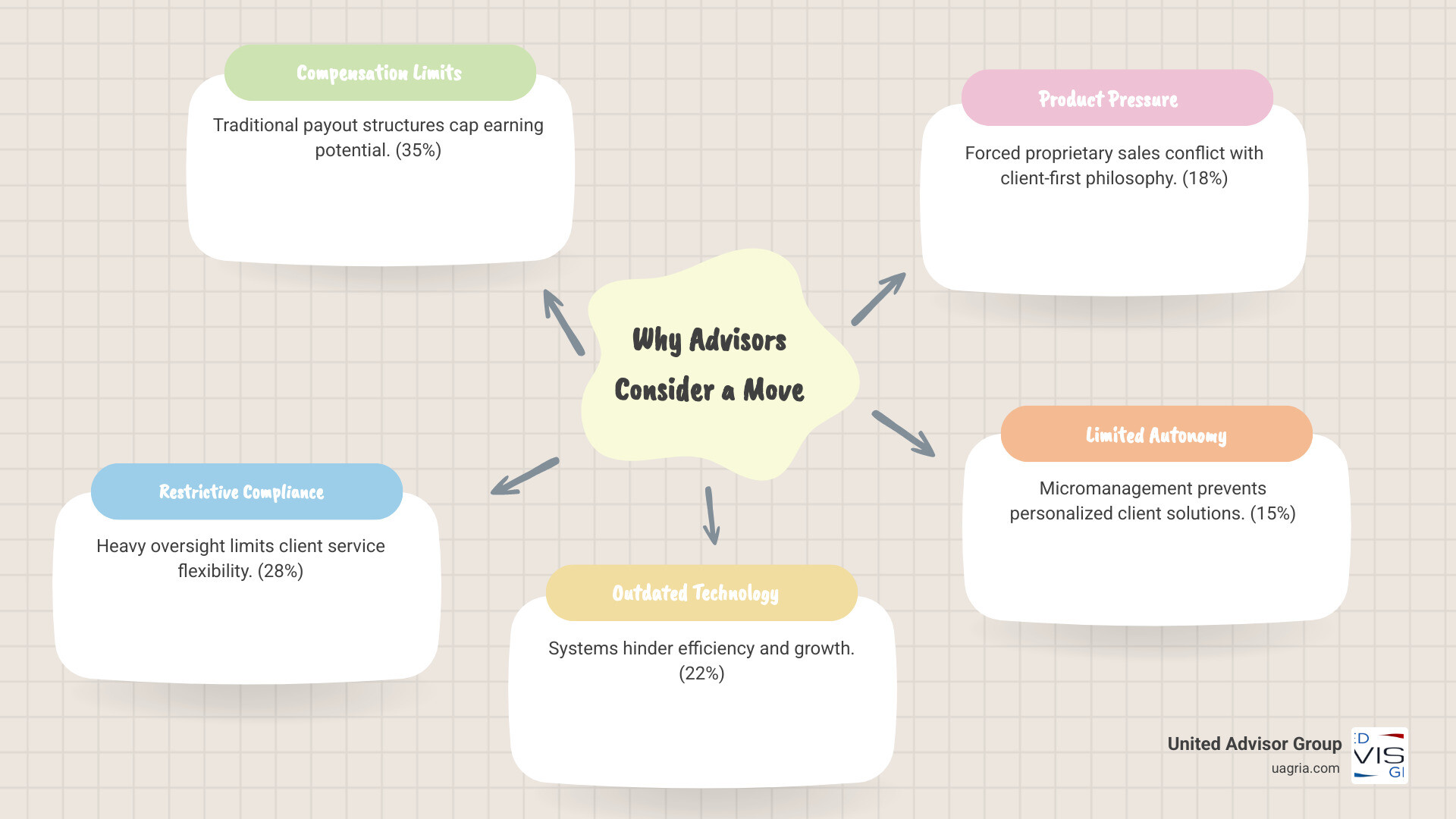
Key reasons advisors consider a move:
- Compensation limitations – Capped earning potential in traditional payout structures
- Restrictive compliance – Heavy-handed oversight that limits client service
- Technology gaps – Outdated systems that hinder efficiency
- Product pressure – Forced proprietary sales conflicting with a client-first philosophy
- Limited autonomy – Micromanagement that prevents personalized solutions
- Succession challenges – Poor exit planning options
The advisory landscape is changing. With 110,000 advisors (38% of the total) expected to retire in the next decade, unprecedented opportunities are emerging for those willing to make a strategic move.
Since 32% of investors switch firms when their advisor leaves, client communication and transition planning are critical. The good news is that properly handled transfers typically complete within 10-20 business days.
I’m Ray Gettins, Director at United Advisor Group. We help exceptional advisors make strategic financial advisor move decisions to achieve greater independence and profitability. Our advisor-designed structure offers the collaboration and flexibility to serve clients without the constraints of traditional models.
The Catalyst for Change: Why Advisors Seek New Opportunities
If you’re researching a financial advisor move, you are likely frustrated with constraints that prevent you from serving clients effectively. These challenges are common catalysts for change.
Firm limitations often top the list of grievances. You may find the perfect investment solution for a client, only to be pushed toward a firm-approved alternative that generates more revenue for the house. It’s like being a chef forced to use a limited pantry—the results are never ideal.
The restrictive compliance environment at many firms has become suffocating. While compliance is vital, you may feel you spend more time on paperwork than advising clients, treating you more like a risk than a trusted professional.
Outdated technology is another major pain point. Clunky, disconnected systems are frustrating for you and make you look unprofessional to tech-savvy clients who expect seamless digital experiences.
Compensation models at traditional firms can penalize success. As your practice grows, you may find your payout percentage decreases, creating a ceiling on your earning potential just as you hit your stride.
The pressure to sell proprietary products creates ethical tension and makes it difficult to maintain your fiduciary duty. True Advisor Autonomy Benefits mean making recommendations based solely on what’s best for the client.
A lack of genuine autonomy is also a key frustration. When firms dictate everything from marketing to client meetings, it stifles the personal touch that makes you an effective advisor.
Succession planning concerns are growing, with 110,000 advisors expected to retire in the next decade. Many traditional firms offer poor transition paths, providing little support for monetizing your life’s work or ensuring continuity of service for your clients.
The good news is that intense industry competition for talent means you have more options than ever. If these challenges resonate, know that you’re not alone or stuck. Alternatives designed by advisors, for advisors, are available to prioritize your success and your clients’ best interests.
Due Diligence: Charting Your Course for a Successful Financial Advisor Move
A financial advisor move is a significant career decision that requires careful planning. Rushing your due diligence can lead to unexpected challenges, so treat this phase as the foundation for your new practice.

Your research should start with evaluating firm models. Understanding the differences between various firm structures, from wirehouses to independent RIAs, directly impacts your client service, compensation, and autonomy.
Assessing firm culture is also crucial. A collaborative, supportive environment is vital for long-term satisfaction, whereas a culture mismatch can undermine even the best compensation package.
The financial stability of your new firm is non-negotiable. You are choosing a partner for your clients’ futures, so investigate the firm’s history, financial backing, and performance during market downturns.
Client ownership models are a critical aspect of your review. Clarify whether you or the firm own the client relationships, as this will significantly impact your transition and the long-term value of your practice.
Your technology stack review should be comprehensive. Modern, integrated tools are essential for efficiency and for meeting the expectations of today’s clients. Outdated systems can slow you down and drive clients away.
Thorough due diligence helps you avoid the Key Problems When Moving to a New Firm that can derail a transition.
Comparing Independence Models: United Advisor Group vs. Traditional Paths
Not all independent models are equal. The traditional path to independence often trades one set of challenges for another, burdening you with operational headaches.
| Feature | Traditional Independent Models | United Advisor Group |
|---|---|---|
| Startup Costs | Often $50,000+ for office, technology, and staff | Minimal – we provide the infrastructure |
| Compliance Support | Usually self-managed or expensive outsourcing | Comprehensive support built into our model |
| Technology Stack | You research, purchase, and integrate everything | Robust, integrated platform ready to go |
| Marketing Resources | Create everything from scratch | Professional marketing support and resources |
| Peer Community | Limited to local networking | Active community of successful advisors |
| Back Office Operations | Your responsibility to manage | We handle it so you can focus on clients |
Traditional independent models may offer high gross payouts, but they leave you responsible for all operations. You become a business owner overnight, distracted from client service by IT, compliance, and marketing tasks.
At United Advisor Group, we offer a better way. Our model provides the benefits of independence and the ability to offer true Independent Financial Advice without the operational burdens. You gain autonomy with the support structure of an established firm, allowing you to focus on what you do best: building client relationships.
Legal & Compliance: Navigating the Non-Negotiables of a Financial Advisor Move
The legal and compliance aspects of your financial advisor move are critical. Getting them right protects you and ensures a smooth transition.
Start with your employment contract review, paying close attention to non-compete clauses and non-solicitation agreements. These restrictions will shape your entire transition strategy.
The Broker Protocol can facilitate your move if both your old and new firms participate, but the rules must be followed precisely to avoid legal issues.
Form U4 and U5 filings are a permanent part of your regulatory record. Ensure accuracy on these forms, as errors can cause long-term problems.
Moving to an RIA structure means embracing the fiduciary standard as a Registered Investment Advisor: Enhancing Client Relationships. This legally requires you to put clients’ interests first, a responsibility many advisors find liberating.
We strongly recommend working with an attorney specializing in advisor transitions. To help guide you, we’ve also created a New Advisor Transition Checklist – PDF Download. Proper legal guidance is essential for protecting yourself and serving your clients without interruption.
Executing the Transition: A Step-by-Step Guide
After your due diligence, it’s time to execute your financial advisor move. This phase requires careful coordination for a successful outcome.

Your resignation strategy sets the tone. Handle this conversation professionally and keep your plans confidential until the moment you resign to ensure a smooth process.
Next is your client communication plan. You need a clear, honest message that shows clients how the move benefits them. This isn’t about defending your decision; it’s about celebrating the improved service you can now provide. While 32% of investors switch firms when their advisor leaves, a strong communication plan can help you retain the vast majority of your clients.
The account transfer process is largely automated. Most transfers use the ACATS system, which typically completes transfers within a 10-20 business day window. ACATS handles in-kind transfers, so clients’ investments can move without being sold, avoiding potential tax consequences.
Asset mapping requires careful attention to detail to ensure every account and holding is transferred correctly to the new custodian. Throughout the process, managing client expectations is key. Be upfront about the transition timeline and any temporary limitations. Honesty builds trust.
The Client Experience During a Financial Advisor Move
A successful financial advisor move is measured by your clients’ experience. When handled well, the transition can strengthen client loyalty.
Your client retention strategies should focus on the positive changes they’ll see, such as broader investment options or better technology. When explaining the benefits, frame them from the client’s perspective. For example, instead of saying, “I wanted more autonomy,” say, “This move allows me to offer you truly customized solutions without any product pressure.”
Be prepared for answering client questions about account safety, fees, or the timeline. Maintaining trust is paramount. Your clients chose you, not your firm, and this is an opportunity to reinforce that relationship with consistent communication and empathy.
We believe in Collaborative Financial Planning, especially during a move. When clients feel like partners, they remain engaged. The 32% statistic doesn’t have to be your reality. With thoughtful communication, your financial advisor move can strengthen client relationships and position your practice for growth.
Post-Transition: Building Momentum in Your New Practice
Congratulations on your successful financial advisor move. Now it’s time to build momentum and bring your vision of independence to life.

Our onboarding process at United Advisor Group is designed for a smooth start, getting you comfortable with our systems and support team so you can focus on clients immediately.
Once settled, you can leverage the new resources at your disposal, including institutional-quality research, advanced planning software, and a modern technology stack. This new toolkit allows you to develop more efficient new workflows custom to your practice.
Marketing your practice also takes on a new dimension. With true independence, you can craft authentic messages that reflect your values and expertise, free from corporate constraints.
The biggest opportunity lies in re-engaging clients for growth. Your loyal clients are now experiencing the benefits of your move. This is the perfect time to discuss their evolving needs and introduce them to your expanded capabilities, turning happy clients into your best source of referrals.
This is about more than maintaining your practice; it’s about building What Growth-Minded Investment Advisors Aim to Achieve in an environment designed for success. The momentum you build now sets the foundation for years of satisfaction and growth.
Access the UAG calculator to see the potential financial impact of your move. Many advisors are surprised by how much more they can earn in their first year.
Frequently Asked Questions about Advisor Transitions
Considering a financial advisor move brings up many questions. Here are answers to the most common ones we hear from advisors.
How long does the entire transition process typically take?
The timeline varies, but it can be broken into phases:
- Planning: This can take a few weeks to several months, depending on the depth of your due diligence. Taking your time here pays off.
- Resignation & Notification: This happens quickly. Your U5 is filed by your old firm, and the U4 process begins immediately with your new firm.
- ACATS Transfer Window: Most client assets transfer via ACATS in one to three weeks. Complex assets like alternatives may take longer.
- Post-Transition Cleanup: Expect a few weeks to finalize details and ensure all accounts are settled.
The total timeline can range from 10-20 business days for a simple book of business to several months for more complex situations. Our team works to keep the process moving smoothly.
What are the biggest risks when changing firms and how can I mitigate them?
A financial advisor move has risks, but planning can mitigate them.
- Client Attrition: This is a top concern, but it’s largely within your control. A strong, transparent client communication plan that clearly explains the benefits of your move is the best way to ensure high retention.
- Legal Action from Former Firm: Violating your employment contract (e.g., non-compete or non-solicitation clauses) can lead to legal trouble. The best mitigation is to hire independent legal counsel specializing in advisor transitions to review your agreements and guide your departure.
- Transition Delays: Paperwork or system issues can cause delays. We mitigate this with a dedicated transition team that anticipates pitfalls and prepares everything carefully.
The key is not to go it alone. Use your new firm’s expertise, get legal advice, and communicate clearly with clients.
Can I talk to my clients about my move before I resign?
This is a legally sensitive area. The short answer is to be extremely cautious.
- The Broker Protocol: If both firms are signatories, the Protocol allows you to take basic client contact information and notify them of your move after you resign. Pre-resignation solicitation is not permitted.
- Employment Agreement Restrictions: Your contract may have strict non-solicitation agreements that supersede the Protocol. Violating these can lead to serious legal consequences.
The importance of legal advice cannot be overstated. An attorney can review your specific contract and tell you exactly what you can and cannot do. It is always safer to wait until after you have resigned to contact clients. Also, be sure to verify your new firm’s registration status to ensure you’re joining a reputable organization.
With proper planning and guidance, your financial advisor move can be the best decision of your career.
Conclusion: Accept Your Independence and Growth
Your financial advisor move is more than a career change; it’s a declaration of independence and a commitment to your clients. This guide has shown you the path from frustration to a thriving, independent practice.
A planned move leads to success. With the right preparation and support, you can avoid common pitfalls and take control of your destiny. Greater autonomy and profitability are the tangible outcomes of a strategic move. Free from proprietary product pressure and restrictive systems, you can focus on serving clients and growing your practice.
At United Advisor Group, our model is built to give advisors the freedom to succeed. We provide the infrastructure, technology, and community you need, combined with the independence you seek. Our advisor-designed structure means we understand your challenges because we’ve lived them.
The financial impact can be substantial. Access the UAG calculator to see how much more you can earn than you are currently earning. You may be surprised by the difference our structure can make to your bottom line.
Don’t let uncertainty limit your potential. The industry is changing, and advisors who thrive will be those who take action. We’re here to help you Find the key problems and opportunities in moving to a new firm and build a custom transition plan.
Your clients deserve the best version of you. Are you ready to accept the independence and growth that awaits on the other side of your financial advisor move?