

Why Financial Advisors Need to Expand Client Base Strategically
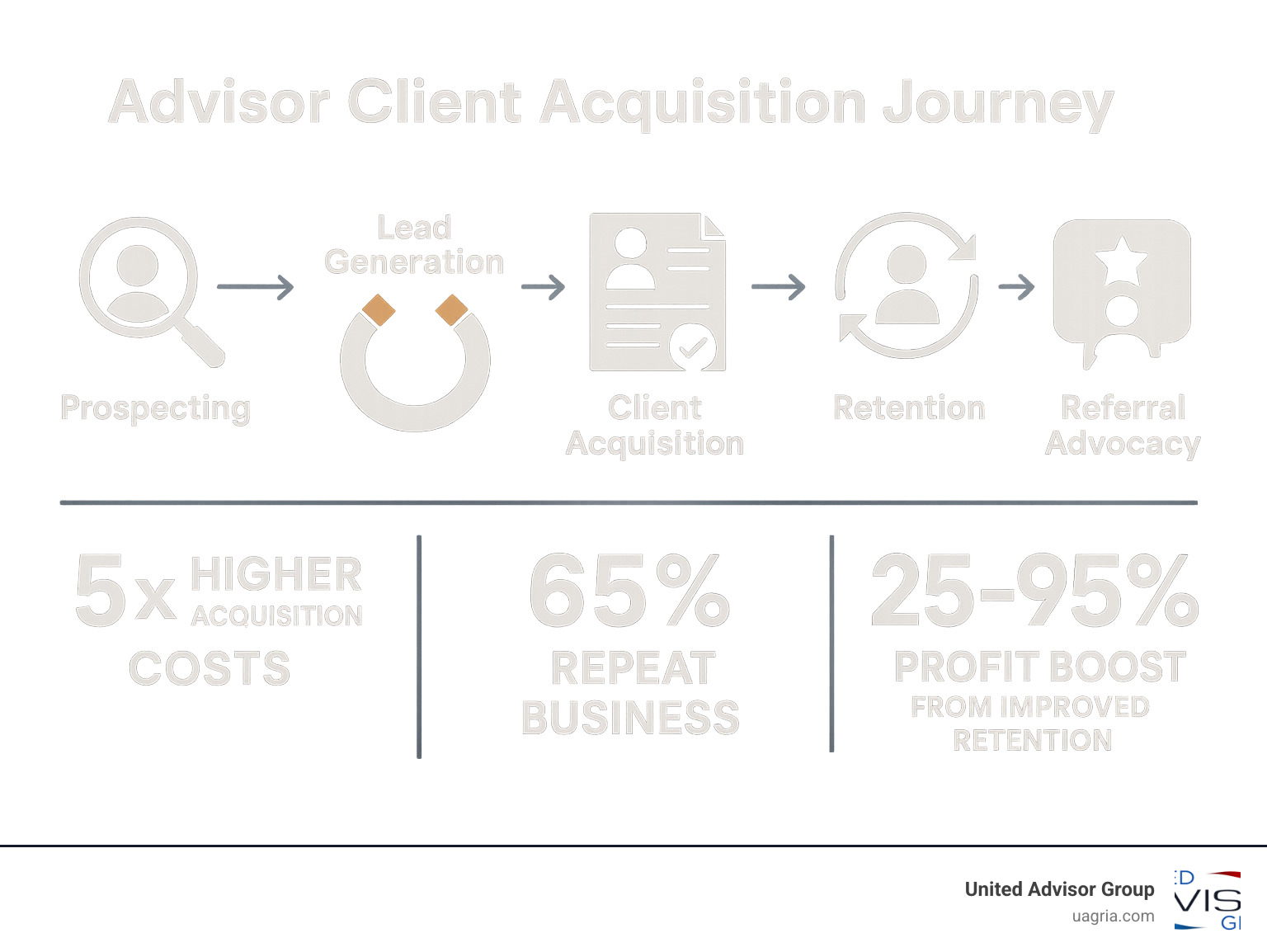
Expanding your client base is a critical challenge for independent financial advisors. While acquiring new clients costs up to five times more than retaining existing ones, sustainable practice growth requires a balanced approach to both.
Key strategies to expand client base effectively:
- Define your ideal client profile – Focus on specific demographics, industries, or life stages.
- Leverage existing relationships – Current clients are your best advocates for referrals.
- Build a digital presence – Content marketing and a strong LinkedIn strategy drive qualified leads.
- Host educational events – Webinars and seminars demonstrate expertise to prospects.
- Create referral programs – Systematically encourage client advocacy.
- Optimize retention first – A 5% increase in retention can boost profits by 25-95%.
The challenge isn’t just finding new clients, but doing so while maintaining the independence and client-first approach that defines quality advisory work. Traditional broker-dealer models often create conflicts through proprietary product pressures and restrictive compliance, limiting your ability to truly serve clients’ best interests.
Successful independent advisors combine strategic client acquisition with exceptional service. This means developing systems that attract ideal clients while deepening relationships with existing ones. When done correctly, satisfied clients become your most powerful marketing asset, generating high-converting referrals.
The financial impact is significant. Research shows that 65% of a company’s business comes from repeat customers, and loyal clients are more likely to purchase additional services and refer others. For advisors, this translates directly to practice value and long-term sustainability.
I’m Ray Gettins, Director at United Advisor Group, where I’ve helped hundreds of advisors transition to true independence and expand client base through strategic practice management. My experience shows that advisors who accept collaborative, client-first approaches with operational freedom consistently outperform those constrained by traditional broker-dealer limitations.
Foundational Strategies: Defining Your Ideal Client and Value Proposition
Strategically planning to expand client base is like building a house: it requires a solid foundation. That foundation is knowing exactly who you serve and why they should choose you.
Many advisors define their Ideal Client Profile (ICP) by age and income, but that’s just scratching the surface. A true ICP goes deeper, covering your clients’ financial worries, communication preferences, and desired level of involvement. When you understand these nuances, your marketing resonates and referrals increase because clients know exactly who to send your way.
The power of specialization can feel scary. You might worry about turning away potential clients. But in today’s crowded market, being everything to everyone means being nothing to no one. While determining the ideal number of clients for independent financial planners is not a straightforward task, quality trumps quantity every time.
Specialization allows you to compete on value, not price. When you’re the go-to advisor for small business owners or medical professionals, you’re no longer just another financial advisor. You’re their financial advisor.
Once you know your who, you need to nail your what. A compelling value proposition articulates the specific change you create in your clients’ lives. What problem do you solve? What outcome do you deliver? For independent advisors, this often means highlighting the freedom of true independence—no proprietary product pressures or conflicts of interest, just pure Advisor Autonomy Benefits that lead to better client outcomes.
Analyzing your current client base is also crucial. Look for patterns: Who is most profitable, most satisfied, and most likely to refer? This analysis often reveals underserved segments and helps refine your targeting.

Clarifying Your Niche in a Crowded Market
Finding your niche isn’t about limiting yourself; it’s about becoming indispensable to a specific group. Would you rather be one of a thousand generalists or the go-to expert for a specialty?
- Demographic niches focus on life stage or family structure, like couples managing joint finances or single women building wealth.
- Psychographic niches go deeper into values, such as working with entrepreneurs or clients passionate about sustainable investing.
- Professional niches target specific careers, like medical practice owners or tech executives managing stock options.
When you choose a niche, you can offer truly Custom Investment Solutions custom to their needs. Your marketing becomes laser-focused, and your case studies speak directly to prospects’ situations.
Crafting a Value Proposition That Resonates
Your value proposition is your promise to clients, answering their unspoken question: “Why should I trust you over another advisor?”
- Communicate your unique benefits: Is it your planning process, accessibility, or specialized knowledge? For many independent advisors, it’s the freedom to always put clients first.
- Focus on client outcomes: Clients don’t buy financial planning; they buy peace of mind and confidence in their future. Frame your services around the life they want to live.
- Differentiate your approach: This could be your collaborative style, transparent fees, or commitment to education. At United Advisor Group, we emphasize No Proprietary Products because clients value unbiased advice.
- Build trust from the first interaction: Your value proposition should immediately signal that you understand their world and have the expertise to guide them. Be specific, authentic, and lead with their interests in mind.
The Modern Advisor’s Toolkit: How to Expand Your Client Base Effectively
Let’s be honest—the days of relying on cold calls are long gone. Today’s successful advisors need a comprehensive approach that blends digital strategies with timeless relationship building. This modern toolkit is designed for sustainable growth.

To expand client base, you must master both inbound and outbound marketing. Inbound efforts draw prospects to you with valuable content, while outbound strategies help you actively reach ideal clients through partnerships and networking.
Building a strong digital presence is non-negotiable. It’s an ecosystem where potential clients can find, engage with, and trust you before you ever speak. This modern approach works especially well for independent advisors, whose authenticity and client-focus can shine through without the constraints of corporate compliance or proprietary product pressures.
Leverage Your Network and Strategic Alliances
People do business with those they know, like, and trust. Your existing network is a powerful asset for growth.
- Your current clients are your best advocates. Research shows your current clients are often your best advocates, with nearly 65% of business coming from repeat customers and referrals. Make it easy for them to refer others.
- Referral programs can be as simple as asking satisfied clients, “Who else could benefit from our work?” Others use formal programs with thank-you gifts or charitable donations.
- Partnering with professionals like CPAs, attorneys, and business coaches opens new opportunities. Add value to their clients, and referrals will happen naturally.
- Networking and community involvement still matter. Focus on building genuine relationships at events where your ideal clients gather or by volunteering for causes you care about.
Dominate the Digital Space to Expand Your Client Base
Your digital presence can be a 24/7 sales team that pre-qualifies leads and builds relationships.
- Content marketing is the foundation. Create valuable content (blogs, videos, case studies) that addresses your ideal client’s concerns to position yourself as an expert. It’s no surprise that 45% of companies planned to increase their content marketing budget in recent years.
- SEO for advisors helps the right people find your content. Focus on answering the questions your ideal clients are asking Google, including local SEO for geographic targeting.
- A LinkedIn strategy is crucial for connecting with prospects and referral partners. Share insights, comment thoughtfully, and expand your network organically.
- Email newsletters provide direct access to prospects. Offer genuine value—market insights, planning tips—to stay top-of-mind.
- Webinars demonstrate your expertise to multiple prospects at once. This works well when you accept Collaborative Financial Planning principles that center on client education.
Demonstrate Expertise Through Events and Thought Leadership
In-person events and thought leadership build deeper connections and establish you as a go-to expert.
- Hosting educational seminars and workshops provides direct value to prospects. Gathering prospects for shared learning experiences can be a powerful way to connect, building trust through education.
- Public speaking at business groups or industry conferences multiplies your reach and positions you as an authority.
- Writing for industry publications extends your thought leadership and creates content you can share across other channels.
These strategies work together. Your content supports your speaking topics, and your LinkedIn strategy amplifies your articles. This integrated approach is even more powerful when you have the freedom to be authentic and client-focused.
The Retention Engine: Deepening Relationships for Sustainable Growth
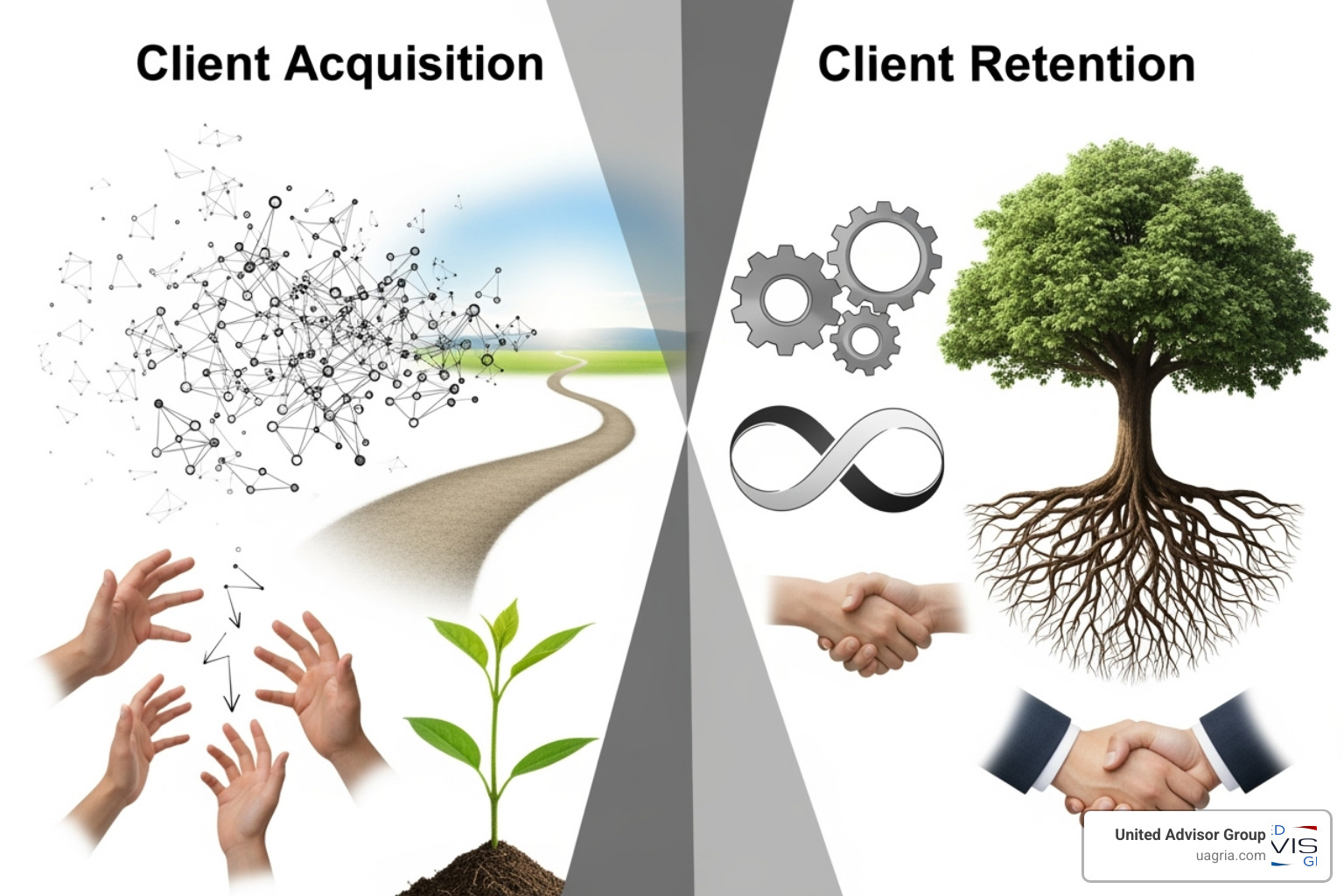
While new clients are exciting, your existing clients are the real foundation of sustainable growth. Client retention is the engine that powers your practice, helping you expand client base for the long haul.

The magic happens when you shift from service provider to trusted partner. This means delivering exceptional client service that goes beyond portfolio management to understanding their lives and goals.
Personalization is your secret weapon. Remembering personal details shows you’re managing relationships, not just money. These touches, combined with proactive communication, create lasting bonds.
For independent advisors, the ability to provide unbiased advice free from proprietary product pressures is a massive retention advantage. Clients sense when you’re working in their best interests, and that trust translates to loyalty.
Client feedback mechanisms are essential for turning satisfied clients into advocates. When clients see you listen and act on their input, they become invested in your success—and invested clients naturally generate referrals.
Fostering Loyalty to Expand Your Client Base
The economics of retention are compelling. The cost of acquiring a new customer is much higher—up to five times more expensive than keeping an existing one. Even more impressive, a mere 5% increase in customer retention can boost a company’s profits by 25% to 95%. These stats are your roadmap to sustainable growth.
- Client appreciation strategies don’t have to be expensive. A handwritten note or remembering a personal milestone creates an emotional connection that reports can’t match.
- Loyalty programs for advisors might include offering long-term clients first access to workshops or exclusive strategy sessions. The key is making your most loyal clients feel special.
As a Registered Investment Advisor: Enhancing Client Relationships allows you to focus entirely on what’s best for your clients. This freedom builds authentic relationships that create lifelong loyalty and turn clients into partners in your growth.
The Power of Feedback and Exceptional Service
Clients don’t expect perfection, but they do expect honesty and care. Creating an environment where feedback flows freely builds deep trust.
- Conducting client surveys should be conversational. A simple question like, “What’s one thing we could do better?” often yields valuable insights.
- Acting on feedback is where the magic happens. Implementing a client’s suggestion shows their voice matters and creates powerful loyalty.
- Building trust through transparency means being upfront about your process, fees, and even mistakes. With trust being a key factor for 81% of consumers, it’s everything in the advisory world.
- Creating memorable client experiences is about consistency in the small things: returning calls promptly, explaining complex topics simply, and celebrating their milestones.
These experiences create an emotional bond that makes clients enthusiastic advocates. They don’t just stay—they actively help you expand client base by referring friends and colleagues.
Overcoming Problems and Measuring Your Success
Even the best-laid plans to expand client base face challenges. Understanding these obstacles and having a solid measurement system is like having a GPS for your practice’s growth journey.
Common growth challenges include market saturation, shifting consumer preferences, and standing out in a crowded marketplace. For many advisors, however, the biggest problems are the internal constraints of their current firm. Traditional broker-dealer models can create barriers with proprietary product requirements, restrictive compliance, and limited flexibility, making it harder to deliver the authentic, client-first experience that drives referrals.
Time management is another major challenge when balancing acquisition with client service. This is often a symptom of inefficient operational structures. When you’re bogged down with administrative tasks, finding time for growth activities is nearly impossible.
Advisors also worry about Key Problems When Moving to RIA from Broker-Dealer, such as client retention and regulatory complexity. With proper support, however, the transition can be smooth and liberating.
Measuring success is about understanding what drives profitable growth. Key metrics include:
- Client Acquisition Cost (CAC): How much you invest to bring in each new relationship.
- Client Lifetime Value (CLTV): The long-term worth of a client, which reveals if your CAC is justified.
- Client Retention Rate: The clearest picture of practice health.
- Referral Rate: A strong indicator of client satisfaction.
- Conversion Rate: How effectively you turn prospects into clients.
Tracking these metrics reveals patterns, such as which acquisition channels yield the highest CLTV or which services boost retention. This data-driven approach transforms growth from guesswork into strategic decision-making. Sustainable growth is about building a business model that serves both your clients and your professional goals. If administrative burdens are limiting your ability to focus on what matters, it may be time to explore a platform that truly supports your ambitions.
Frequently Asked Questions about Expanding a Client Base
As I work with advisors considering their next move, certain questions about how to expand client base come up repeatedly. Here are the most common ones.
How many clients should a financial advisor have?
There’s no magic number. The ideal client count depends on your service model, capacity, and the practice you want to build. Some advisors thrive with 300+ households, while others prefer a boutique model with 50-75 deep relationships. The key is delivering exceptional service to each client profitably.
When you’re free from broker-dealer pressures, you can focus on serving clients well. I’ve seen advisors who felt overwhelmed with 200 clients at an old firm feel energized managing 250 with true independence. Quality over quantity is a business strategy that leads to higher satisfaction and better referrals. The real question is: “How many clients can I serve exceptionally well while building the practice I want?”
What’s more important: acquiring new clients or retaining existing ones?
You need both, but if you have to focus, retention wins every time. The math is compelling: acquiring a new client costs up to five times more than keeping an existing one. Furthermore, a 5% increase in client retention can boost profits by 25% to 95%. Your long-term clients are more profitable and your best source of high-converting referrals.
Think of it this way: a happy client who refers two new clients is worth more than a single new acquisition. They become part of your marketing team. The most successful independent advisors create an exceptional client experience that makes retention natural. When clients feel cared for, they stay—and they talk about you to their friends.
How can I effectively find a niche as a financial advisor?
Finding a niche is a powerful way to expand client base efficiently. Instead of being a generalist, you become “the retirement expert for small business owners” or “the advisor for tech executives.”
- Start with self-reflection. What financial challenges interest you? What unique experience or knowledge do you have?
- Look at your current client base. Which relationships energize you most? Which clients refer others? Your ideal niche may already be in your practice.
- Conduct market research. Are there underserved groups in your area? Many advisors overlook the needs of divorced professionals, military families, or creative professionals.
Independence allows you to choose a niche based purely on where you can add the most value, and that authenticity is a powerful differentiator. Niching down doesn’t mean turning away good clients; it means focusing your marketing to attract ideal clients more easily.
Conclusion
Strategically expanding your client base is an ongoing journey. It requires dedication, the right tools, and most importantly, the freedom to truly serve your clients’ best interests.
Throughout this guide, we’ve seen how defining your ideal client and crafting a resonant value proposition create a foundation for growth. We’ve covered the modern advisor’s toolkit to expand client base effectively and emphasized that sustainable growth is powered by the retention engine of deep client relationships.
The reality is simple: when you have the autonomy to make decisions based purely on what’s best for your clients—without sales quotas or excessive compliance burdens—everything becomes easier. Your clients trust you more, refer more often, and stay longer.
At United Advisor Group, we’ve built our entire platform around this principle of advisor autonomy. We believe that when advisors have operational freedom combined with robust support for practice management, compliance, and business development, they create better outcomes for their clients and more profitable, fulfilling practices for themselves.
The financial benefits of this approach are real and measurable. Many advisors are surprised by how much more they could earn when freed from traditional broker-dealer limitations. The combination of higher payouts, reduced operational costs, and increased client satisfaction is a powerful formula for growth.
If you’re ready to explore what true independence could mean for your practice and your ability to expand client base while staying true to your values, we’re here to help. See how much more you could earn with the freedom to truly serve your clients—use our financial benefit calculator and contact us to discuss the advantages of our independent platform.
Your clients deserve an advisor who can focus entirely on their success. You deserve a platform that supports that mission without compromise.

