

Why Strategic Advisor Recruitment Has Never Been More Critical
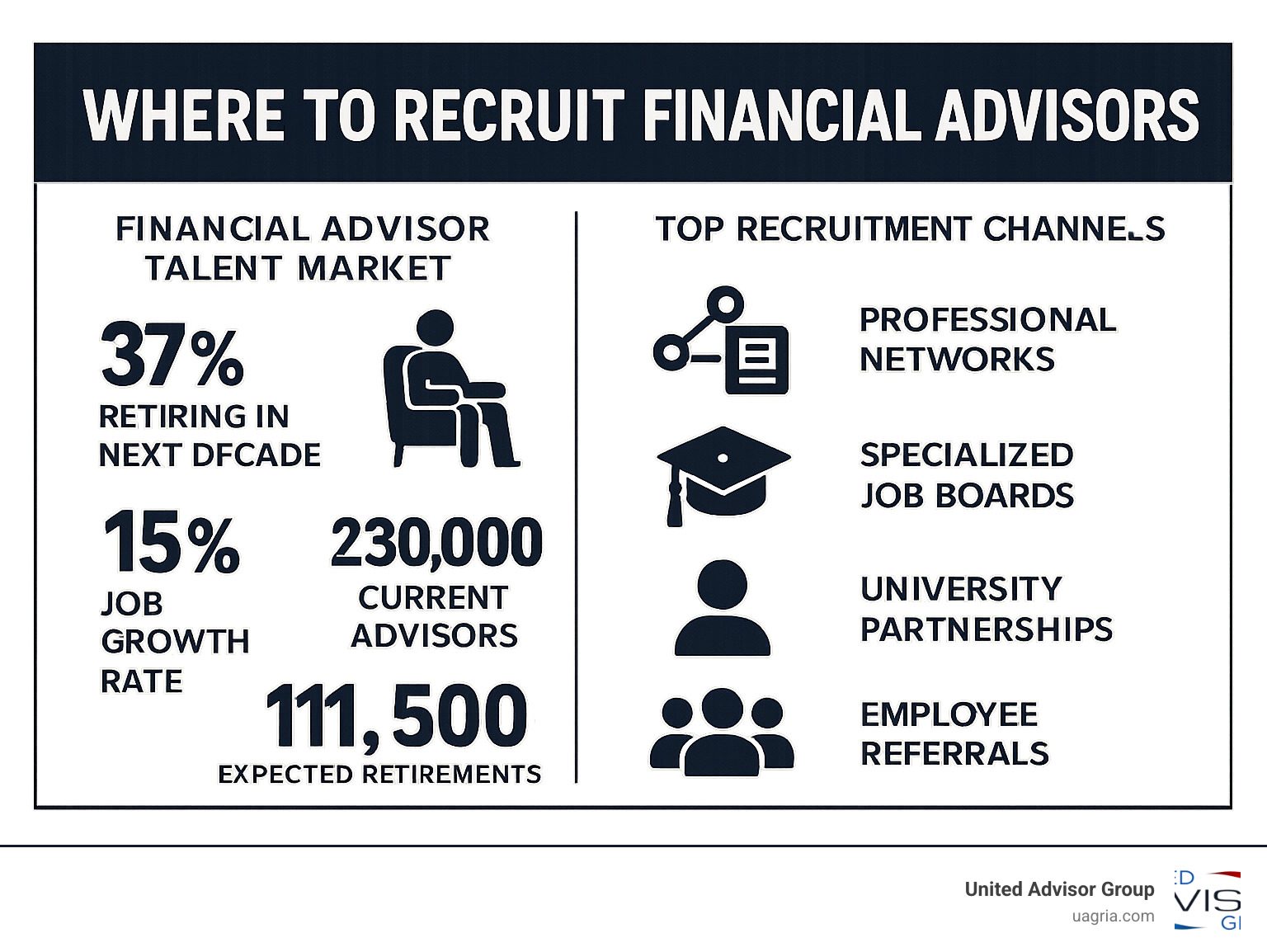
Knowing where to recruit financial advisors is a pressing question for growing firms facing unprecedented talent challenges. The data is compelling: over 37% of financial advisors are expected to retire in the next decade, while demand for advisory services grows at 15% annually—far exceeding the 5% average for all occupations.
Top recruitment sources for financial advisors include:
- Professional networking platforms (LinkedIn, industry associations)
- Specialized job boards and industry directories
- University partnerships with finance and CFP programs
- Employee referral programs within existing networks
- Local business communities and chambers of commerce
- Digital recruiting through targeted advertising and social media
- External recruiting firms specializing in financial services
- Educational workshops and industry events for direct engagement
The challenge isn’t just filling seats. Top advisors seek freedom from proprietary product pressures, collaborative environments, and true fiduciary independence. They want firms that prioritize client outcomes over sales targets.
With over 230,000 financial planners in the U.S. and an estimated 111,500 set to retire in the next decade, competition for quality talent has intensified. Successful recruitment requires understanding what drives advisor satisfaction beyond compensation.
I’m Ray Gettins. Through my work with United Advisor Group, I’ve helped countless advisors transition from restrictive broker-dealer environments to truly independent practices. For us, recruiting financial advisors is about finding partners who share our client-first mission. The best recruitment happens when firms clearly articulate their commitment to advisor autonomy and collaborative growth.
Understanding the Modern Advisor: What Top Talent Seeks in a Firm
Where to recruit financial advisors starts with understanding what top talent wants. Think of it like dating—you need to know what attracts your ideal partner before you start looking.

Modern financial advisors aren’t just looking for a job; they’re seeking a professional home to thrive. Their motivations run deeper than a paycheck. They want genuine advisor autonomy to make decisions based solely on what’s best for their clients, not a product manufacturer’s bottom line.
Company culture is a make-or-break factor. Advisors are tired of sales-floor environments and are drawn to firms that foster collaboration, transparency, and a client-first mentality.
Work-life balance is a non-negotiable for many advisors who know burnout helps no one. They want flexible scheduling and remote work options. A robust technology stack that makes their job easier is also high on their list.
Career development opportunities matter. Advisors want a clear path forward, whether it’s expanding expertise, taking on leadership roles, or becoming partners. A compelling Employee Value Proposition (EVP) that spells out these opportunities—and delivers on them—is what separates top firms.
When advisors experience true Advisor Autonomy Benefits, they become better at serving clients, happier in their work, and more successful overall.
Crafting an Irresistible Firm Identity
Your firm’s identity is its personality—it attracts or repels people. Defining your mission isn’t about crafting pretty words for your website; it’s about articulating what you stand for beyond making money.
The best firms know their mission revolves around genuine client success, not sales targets. They understand that financial rewards matter, but they’re not the whole story. Today’s advisors want compelling work that challenges them and makes a real difference.
The right workplace atmosphere fosters an environment where advisors feel trusted, supported, and empowered. It’s about building a place where Monday mornings aren’t a punishment.
If you’re serious about attracting top talent, Build an EVP that honestly reflects what you offer. You want to partner with advisors who share your vision for What Growth-Minded Investment Advisors Aim to Achieve.
The Critical Role of Compensation, Freedom, and Culture
Let’s be honest—competitive pay matters. Smart bonus structures that reward the right behaviors (like client satisfaction and retention, not just sales volume) are powerful motivators.
But compensation is just the entry ticket. What truly sets firms apart is the freedom they offer. Flexible scheduling and remote work options show you trust your advisors to deliver results without micromanagement.
Supportive leadership makes all the difference. Advisors want leaders who provide guidance, not rigid mandates. They want to work for people who understand that their success depends on their advisors’ success.
Operating under a true fiduciary standard isn’t just about compliance—it’s about peace of mind. Advisors sleep better knowing they work for a firm that puts client interests first. That’s why our commitment to No Proprietary Products resonates with advisors tired of feeling conflicted about their recommendations.
When advisors feel empowered and trusted, they perform better and stay longer. In an industry with expensive turnover, that’s a competitive advantage you can’t ignore.
Where to Recruit Financial Advisors: Top Digital and In-Person Channels
Now that we know what drives today’s advisors, the question is where to recruit financial advisors who share our values. Finding quality talent requires a thoughtful strategy that reaches advisors where they spend their time, not just posting a generic job listing.

Successful recruitment combines digital reach with personal connection. Professional networks and industry-specific job boards give us access to advisors actively exploring opportunities, while local networking lets us build genuine relationships.
What I’ve learned is that the best candidates often aren’t desperately job hunting. They’re thoughtfully evaluating their options, looking for a firm that understands their desire for independence and client-focused service.
Your existing team can be your greatest recruitment asset. Employee referrals consistently produce the highest-quality candidates because they come pre-vetted by someone who understands your culture. When your current advisors are happy, they naturally become ambassadors who attract like-minded professionals.
Where to Recruit Financial Advisors Using Specialized Job Boards and Professional Groups
When we’re serious about where to recruit financial advisors, specialized platforms are the first stop. Industry-specific job boards understand our needs and attract advisors genuinely interested in financial services careers.
Professional associations offer targeted access to advisors invested in their professional development. These platforms let us connect with advisors who have specific expertise, whether it’s working with particular client demographics or specializing in areas like retirement planning.
The beauty of these channels is their focus. We’re not competing with every other industry for attention. We’re reaching advisors who understand the value of independence and might be seeking opportunities to provide Custom Investment Solutions without proprietary product constraints.
Industry directories also help us identify advisors in specific geographic areas or with particular specializations. This targeted approach means we can craft our outreach to address their specific interests.
Using the Power of Digital and Local Networks
LinkedIn has revolutionized how we connect with potential candidates. It’s not just about posting jobs—it’s about building relationships and sharing our story. When we showcase our commitment to advisor autonomy and client-first service, the right candidates naturally gravitate toward us.
Employee referral programs work because they tap into trust. When we offer meaningful incentives for successful referrals, our team becomes invested in finding great candidates who understand our culture.
A creative approach that works well is using Google Alerts for talent spotting. Set up alerts for terms like “financial advisor achievements” or “advisor transitions” in your target markets. When an advisor makes news, reach out with genuine congratulations. These warm connections often lead to meaningful conversations.
Local community engagement remains incredibly valuable. University partnerships with finance programs give us access to emerging talent. Local Chamber of Commerce events and Meetup groups let us build relationships within our community.
For firms serving specific regions, this local approach is powerful. Whether you’re looking for advisors interested in Wealth Management Services Designed for Cincinnati Locals or another community, being visible and engaged locally establishes credibility.
The key is consistency. Regular participation in these channels, combined with authentic messaging about our values, creates a steady pipeline of interested candidates who align with our mission.
Strategic Recruitment Approaches: In-House, External, and Creative Methods
Deciding on the best approach for where to recruit financial advisors involves weighing in-house vs. external recruitment and embracing creative methods. Each approach has merits, and most successful firms use a combination of strategies.

Recruitment isn’t one-size-fits-all. What works for one firm might not work for another, depending on your resources, timeline, and the type of advisor you’re seeking. Let’s walk through the key considerations to help you make the right choice.
| Feature | In-House Recruitment | External Recruiters |
|---|---|---|
| Cost | Lower direct cost per hire, but higher internal resource cost (time, staff) | Higher direct fee (percentage of salary or flat fee) |
| Speed | Can be slower due to internal resource limitations | Often faster due to specialized focus and networks |
| Candidate Quality | High potential for cultural fit, relies on internal network | Access to wider, pre-screened talent pool, specialized expertise |
| Culture Fit | Easier to assess and integrate | Requires clear communication of firm culture to recruiter |
| Access to Talent | Limited to internal networks and job board reach | Extensive, often passive, candidate databases |
Evaluating In-House vs. External Recruiting
When building your recruitment strategy, cost-effectiveness is often the first question. In-house recruitment appears cheaper, but don’t forget the hidden costs: your team’s time, the learning curve, and the opportunity cost of pulling people from client-facing activities.
The speed of hiring is often a deciding factor. External recruiters live and breathe this work. They can often present a curated list of qualified candidates in 24-48 hours, while an in-house team might still be crafting the job post.
Candidate quality is where it gets interesting. In-house recruitment gives you complete control, allowing for deeper conversations about culture fit and your firm’s unique value. However, external recruiters bring access to passive candidates—high-performing advisors who aren’t actively job hunting but might be open to the right opportunity.
This is particularly valuable when you’re exploring Insights on Costs Involved in Becoming an RIA and need advisors who understand the transition. Many recruiting firms offer a “no pay until hire” model, which helps with cash flow.
Where to Recruit Financial Advisors with Creative Sourcing Ideas
Here’s where smaller, independent firms can shine. Creative sourcing is your secret weapon for competing with big players.
Hosting educational workshops for advisors is a favorite strategy. You position yourself as a thought leader while creating a natural environment to connect with quality candidates. Before and after sessions, you can casually mention opportunities at your firm. It’s relationship-building disguised as professional development.
Targeted digital advertising through Google AdWords can reach advisors quietly researching their options. When someone searches for “RIA transition” or “independent advisor opportunities,” your firm can be there with relevant content.
Your careers page deserves special attention. Don’t just list job requirements—showcase your firm’s personality with team photos, virtual office tours, and genuine staff interviews. Let candidates feel what it’s like to work in an environment focused on Secrets to Achieving Organic Business Growth Effectively.
The magic happens when you focus on opportunities over requirements. Instead of demanding “10+ years experience with $50M+ AUM,” try “Ready to grow your practice in an environment where your clients’ best interests always come first?” This attracts advisors motivated by mission, not just metrics.
Recruitment should be a firm-wide effort. Reward all staff for quality introductions. Every team member becomes a potential recruiter when they’re excited about your firm’s culture and mission.
The Advisor Journey: From Onboarding to Long-Term Retention
Answering where to recruit financial advisors is just the beginning. The real magic happens in the first few months as a new hire becomes a thriving partner who loves their work.

Think about your own career. On the first day at a new firm, you feel a mix of excitement and nervousness, hoping the reality lives up to the promises. That’s where your new advisors are, and this delicate transition period determines whether they become long-term successes.
We’ve learned that effective onboarding isn’t about overwhelming someone with information. It’s about creating a welcoming environment where advisors feel supported as they steer their transition. This journey often leads to the kind of experiences we see in RIA Transition Success Stories That Motivate Lasting Change.
Best Practices for Onboarding and Ensuring Success
Successful onboarding programs share common elements. Structured training that respects an advisor’s expertise while introducing your firm’s approach works far better than a sink-or-swim mentality. We spread this learning over weeks rather than cramming it into overwhelming orientation sessions.
Peer mentorship is invaluable. Pairing a new advisor with someone who’s walked in their shoes helps them learn the unwritten rules and how things really work. These relationships often become lasting friendships that strengthen your team culture.
Setting clear expectations from the start eliminates stress. New advisors want to know what success looks like, how decisions are made, and where they fit in. Advisors thrive when they understand their path forward and see genuine growth opportunities.
Technology integration deserves special attention, as clunky systems frustrate productive advisors. We ensure new team members get comfortable with our platforms quickly, providing a seamless experience that supports Collaborative Financial Planning.
Regular check-ins during the first few months aren’t micromanagement; they show you care. These conversations help us understand each advisor’s motivations and align our support with their goals.
Navigating Compliance and Measuring Recruitment ROI
Let’s be honest: the legal and compliance landscape can feel overwhelming, especially for transitioning advisors. FINRA regulations, the Broker Protocol, and non-solicitation agreements create a complex web requiring careful navigation.
The beauty of a truly independent firm lies in how we handle these challenges. While maintaining the highest compliance standards, we eliminate many unnecessary broker/dealer compliance burdens that bog down advisors at traditional firms. This helps advisors avoid common pitfalls outlined in Key Problems When Moving to RIA from Broker-Dealer.
From a business perspective, measuring recruitment success helps us improve. Cost-per-hire tells us our investment, but more meaningful metrics focus on long-term success. Advisor retention rates reveal if we’re creating an environment where people want to stay.
New AUM tracking provides concrete evidence of an advisor’s contribution, but numbers are only part of the story. The real ROI shows up in team morale, client satisfaction, and a collaborative culture that makes great advisors want to refer others.
Frequently Asked Questions about Recruiting Financial Advisors
I’ve had countless conversations with firm leaders eager to grow their teams but unsure where to start. The questions are often similar, which makes sense—recruiting quality financial advisors isn’t taught in business school. Here are answers to the most common questions.
What are the first steps a firm should take before starting to recruit?
Before exploring where to recruit financial advisors, get your own house in order. It’s tempting to jump into posting job ads, but successful recruitment starts with honest self-reflection.
Define your hiring goals first. What specific gap are you trying to fill? Are you looking for someone to serve existing clients, or do you want to expand into new markets? Maybe you’re targeting a niche like small business owners or retirees. Getting clear on this shapes everything that follows.
Next, analyze your company culture. What would your current team say it’s really like to work at your firm? This honest assessment helps you understand what you’re actually offering.
Finally, create an ideal candidate profile that goes beyond typical requirements. What personality traits thrive in your environment? What values align with your mission? When you can clearly articulate who you’re looking for, you’ll recognize them when you find them.
How can a smaller firm compete with larger ones for top advisor talent?
This question assumes bigger is automatically better—and that’s simply not true. Some of the most satisfied advisors I know work at smaller, more nimble firms that offer something the big players can’t.
Your size is your superpower. While larger firms might offer flashy signing bonuses, you can offer genuine relationships and meaningful autonomy. Top advisors are increasingly frustrated with corporate bureaucracy and want the Advisor Autonomy Benefits that come from a client-first firm.
Emphasize flexibility and partnership potential. Can you offer remote work, flexible schedules, or a clear path to equity? Larger firms often can’t pivot quickly on these requests, but you can.
Most importantly, promote your client-first environment. When advisors know they won’t be pressured to sell products that aren’t in their clients’ best interests, it’s incredibly freeing. That freedom leads to better client relationships and more sustainable growth.
What is the biggest mistake firms make when recruiting financial advisors?
Without hesitation, the biggest mistake is focusing solely on an advisor’s book of business while ignoring their fit with your firm’s culture and vision.
Yes, a large AUM is exciting. But if their client service approach, communication style, or values don’t align with yours, you’re setting everyone up for frustration. I’ve seen firms hire “rock star” advisors only to see them leave within 18 months, taking clients and team morale with them.
The true cost of a bad hire extends far beyond salary. It includes training time, integration costs, client disruption, and the impact on your team’s confidence. When you factor in the cost of damage control and starting the recruitment process over, that impressive AUM doesn’t look so attractive.
The advisors who succeed long-term are the ones who share your vision for exceptional client service. Cultural alignment isn’t just nice to have—it’s essential for sustainable growth.
Conclusion
Recruiting financial advisors is just the beginning. As we’ve explored, strategic recruitment is more than posting job openings; it’s about creating an environment where talented advisors genuinely want to build their careers.
Successful firms understand that today’s advisors seek true independence—freedom from the pressure to sell proprietary products that may not serve their clients’ best interests. They want to work where the fiduciary standard is a lived reality, not just a buzzword.
Strategic recruitment means recognizing that compensation, while important, isn’t everything. The advisors who will drive your firm’s growth are looking for supportive cultures, flexible work arrangements, and clear paths for professional development. They want to feel trusted and empowered, not micromanaged.
From LinkedIn to local networking, the channels for finding talent are diverse. But the real magic happens when you can clearly articulate what makes your firm different—when you can show advisors how joining your team will help them better serve their clients while building the career they’ve always envisioned.
Long-term retention starts with the first conversation. When advisors see your commitment to their success, genuine autonomy, and a client-first focus, they’re not just joining a firm—they’re joining a mission.
If you’re an advisor wondering what your earning potential could look like in a truly independent environment, the numbers might surprise you. We invite you to Use our calculator to find the financial benefits of leaving your broker-dealer or RIA for United Advisor Group and find what it means to work with a firm that puts your autonomy and client-focused service first.

